Hi all, thanks for your great work as always. As I approach the end of black belt, I wondered is there any more material planned soon for the south welsh? I really really hope so, Automagic is the best way to load new words and phrases,
Thanks all
Doug
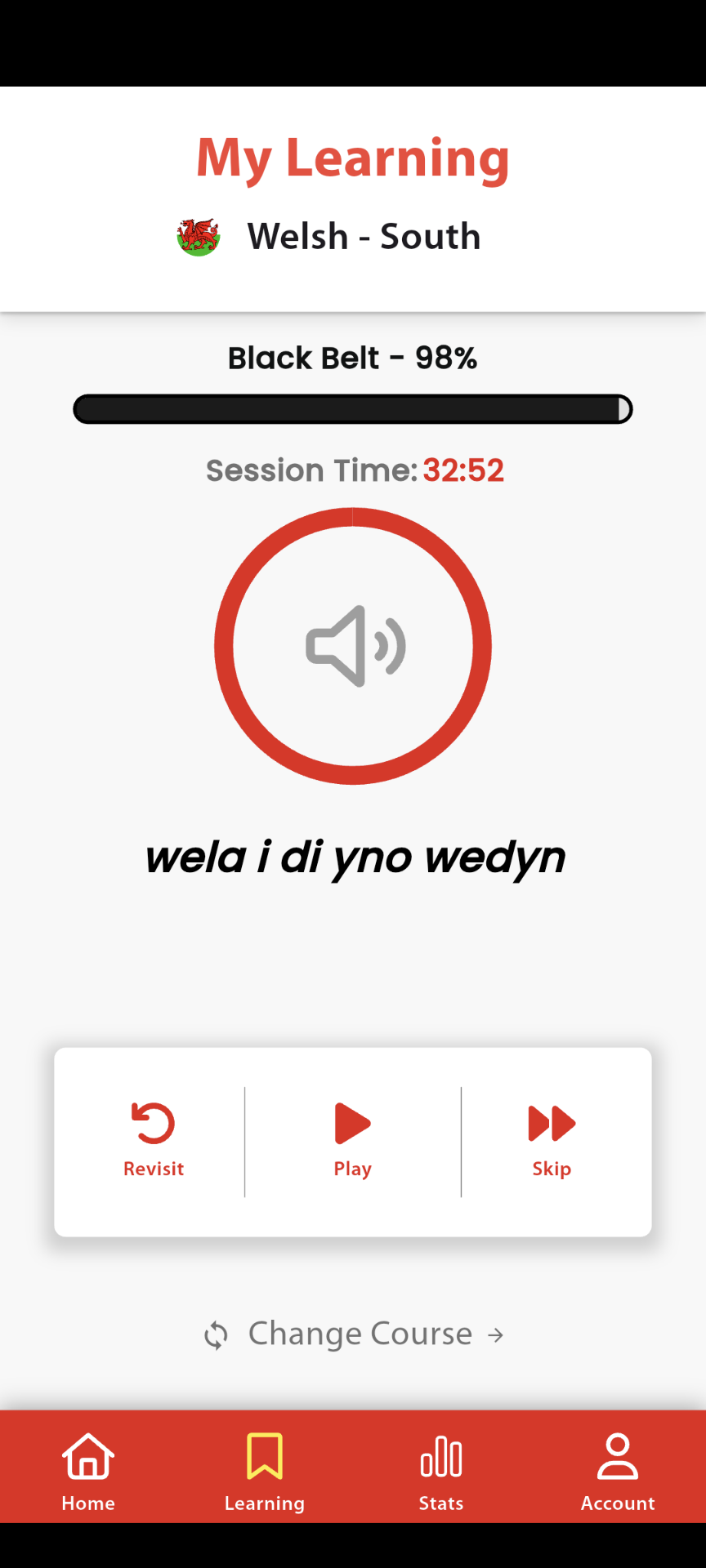
Here’s a first. Two unannounced words in the same sentence. That threw me I can tell you.
Luckily swydd (job) had just been introduced.
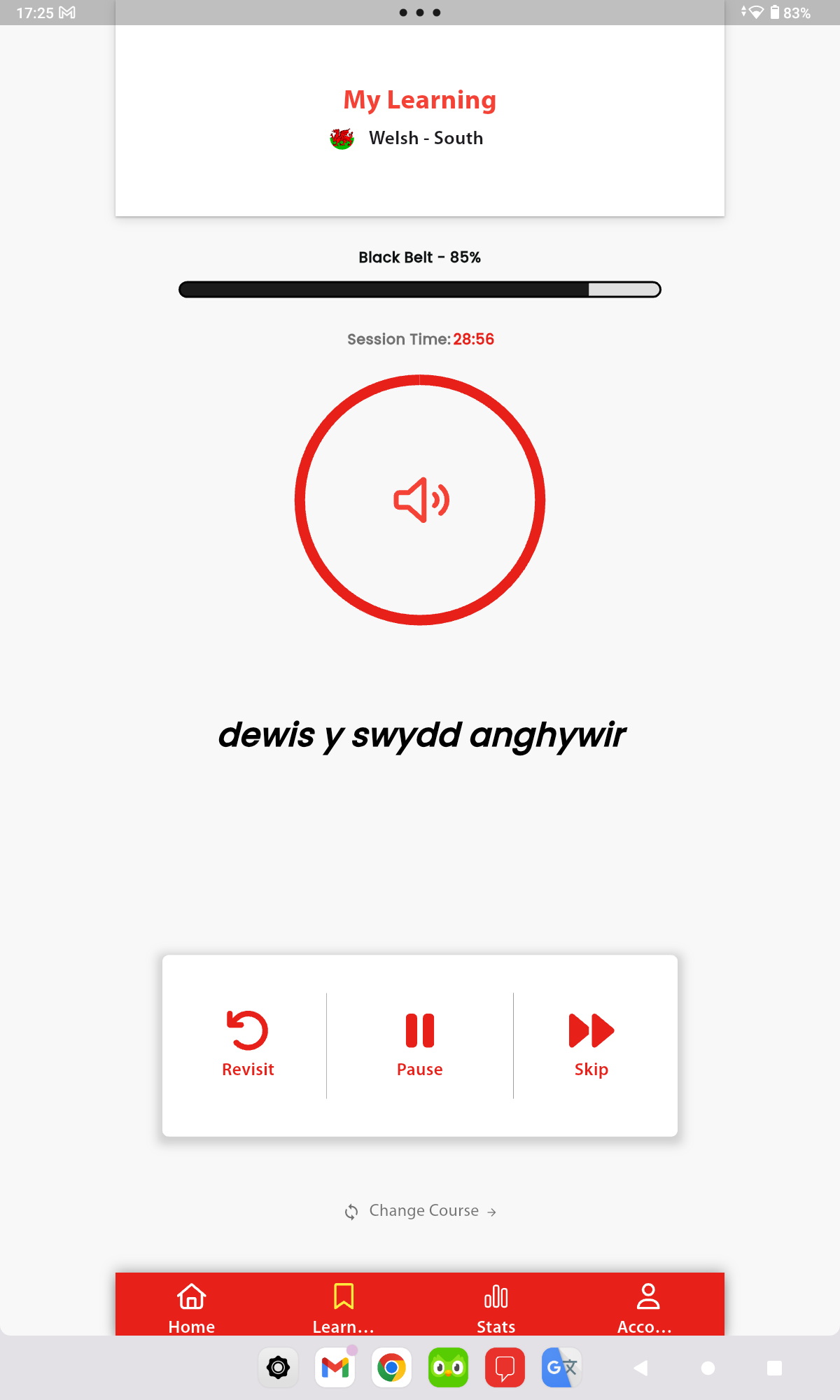
Dewis (choose) and anghywir (wrong)
Here are the ones I’ve picked up today.
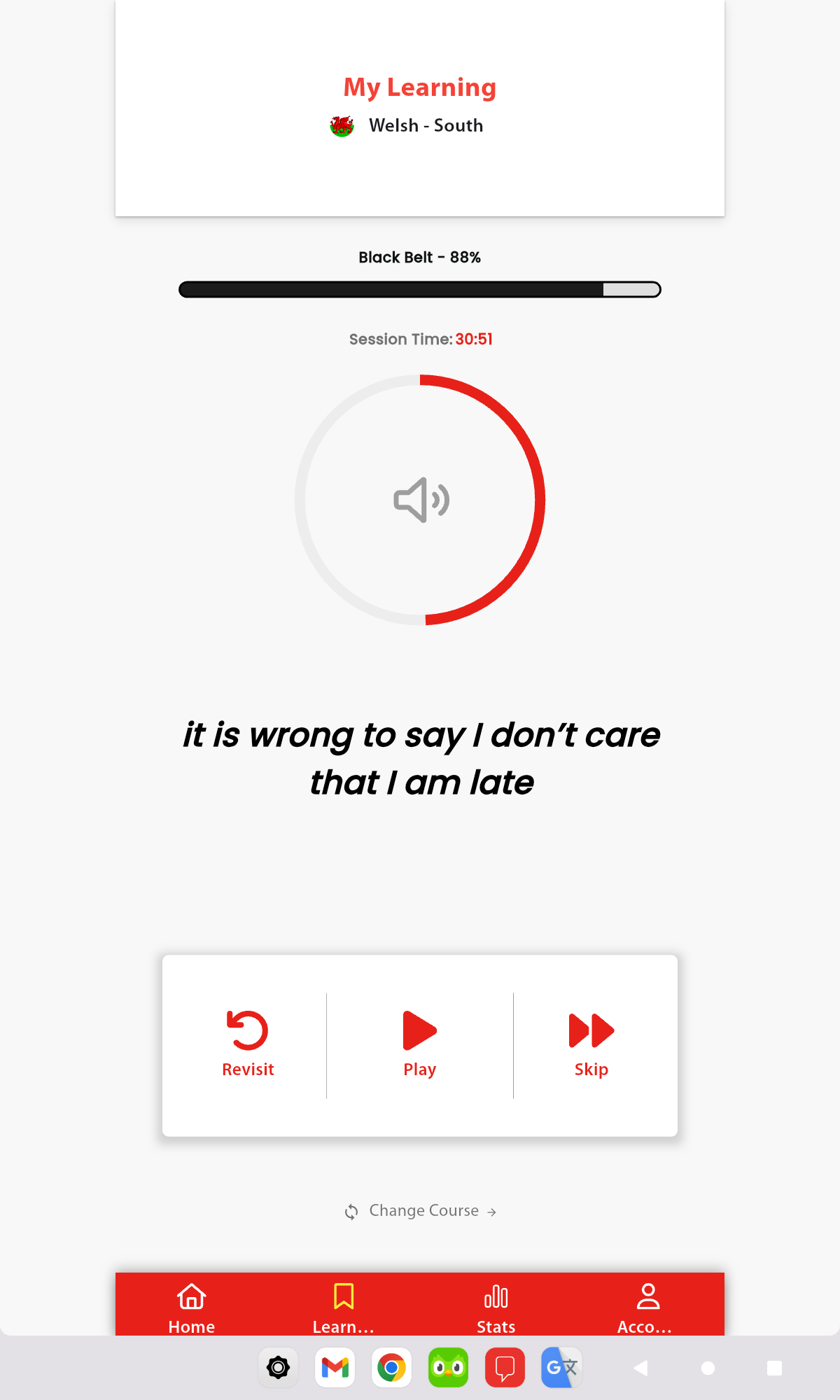
Previously “becso” had been introduced as “to worry”. Here it takes the meaning “care”.
The "(that)“I don’t care” bit has been translated as “nagw I’n becso” with “nagw” being
a new unintroduced form.
So “(that)I don’t care” = "nagw i’n becso’
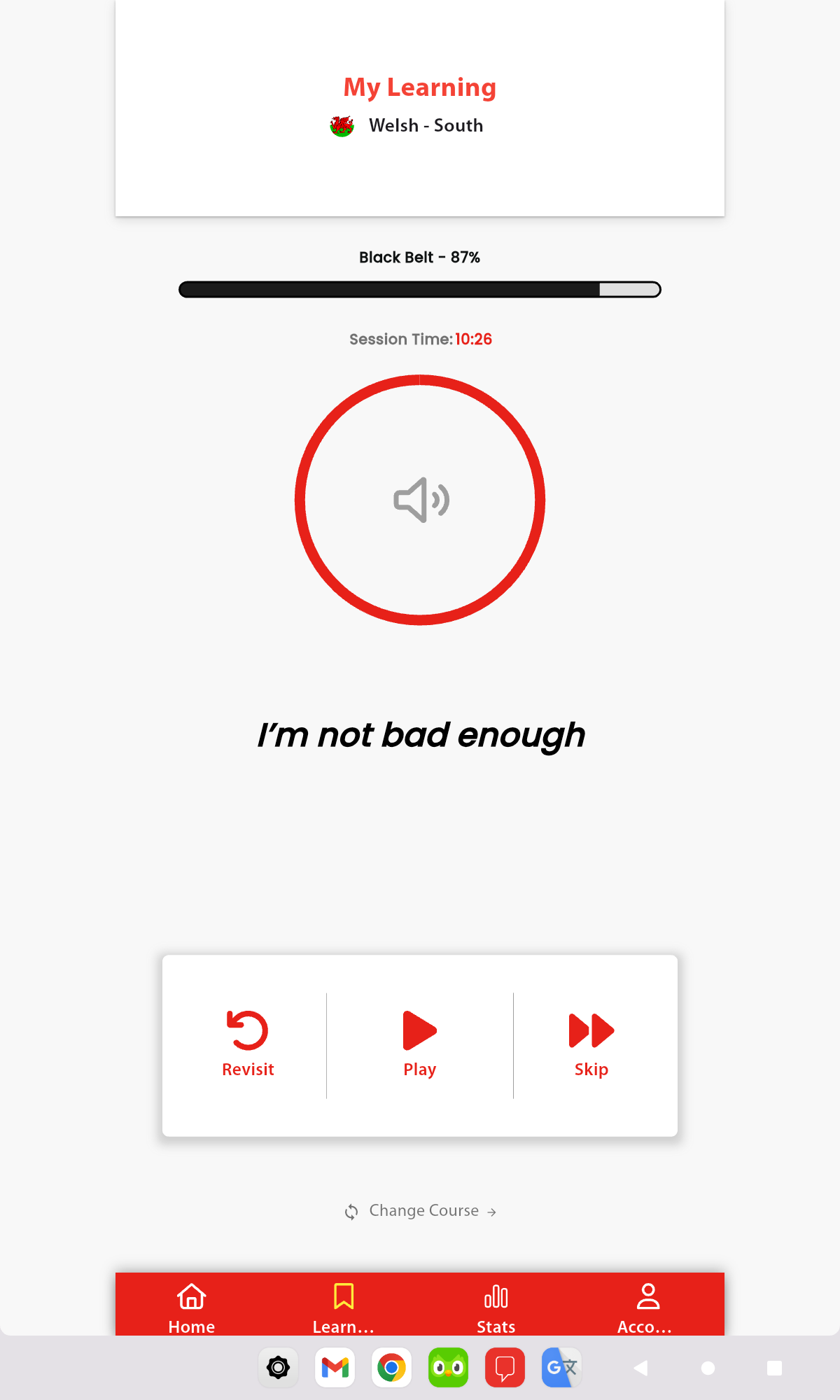
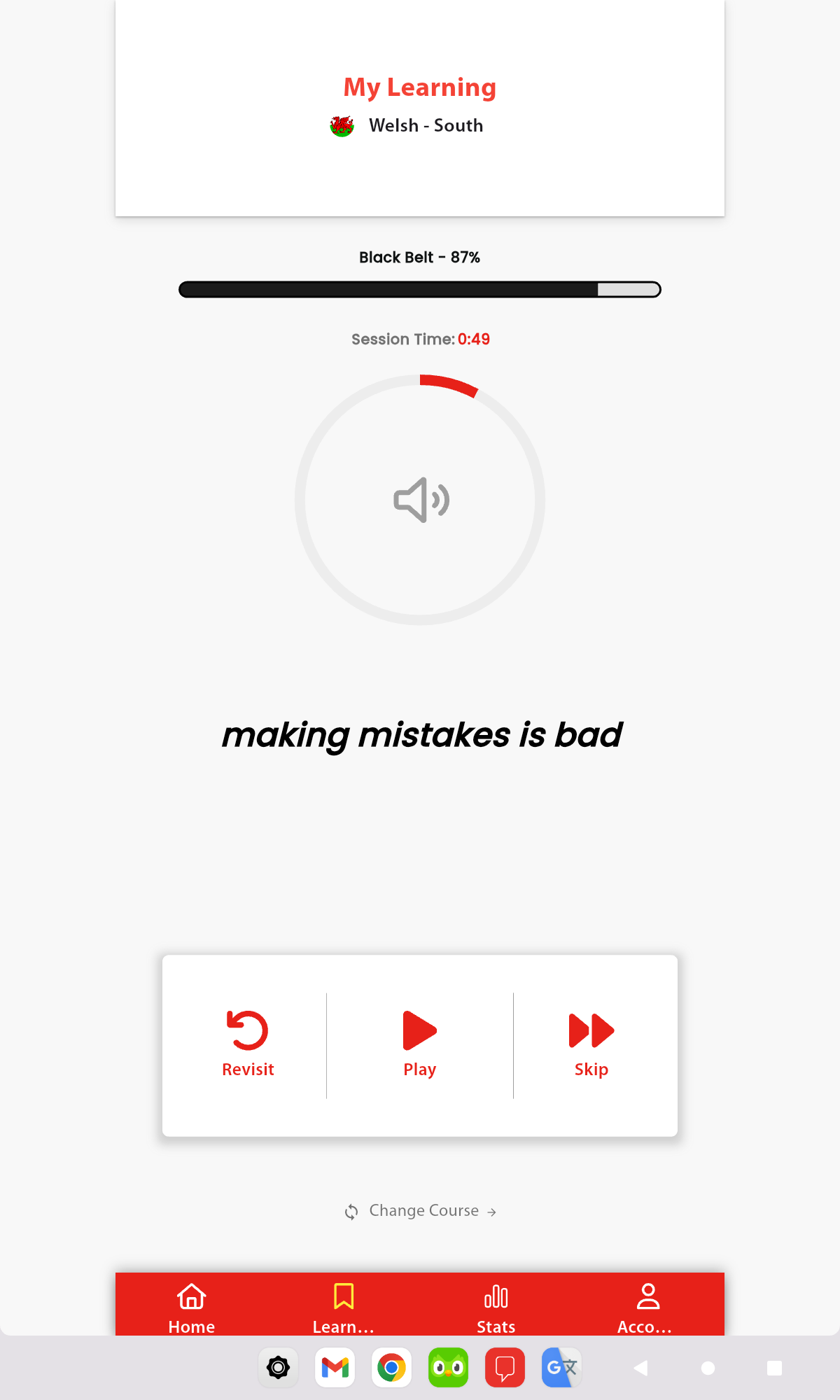
The next 2 screenshots are silent English ones which doesn’t help if you are just listening to the course as well as viewing.
1 Like
The app knows that “making mistakes is bad” is too blasphemous to be said out loud! 
2 Likes
the na part here you meet in various places in the course, e.g. os na nei di introducing something negative, so nagw i’n isn’t really new as such. It’s just an adaptation of something you’ve met before. You’ll come across things like that a lot in real conversations, so being able to work them out is a good skill to develop.
1 Like
Thank you for your explanation. The rolling together of nag & DW had confused me.
1 Like
Would you believe it!
“Nagw i’n becso” (that I don’t care) has just been formally introduced!!
1 Like
From today, “os” for “if” introduced formally.
But this has been used extensively since the earliest days of the course
1 Like
@nigel-28 can you check in Account => About and see what version of the app it’s showing there?
I’ve skipped my app along to Black Belt 35% and testing to see if I can recreate what you’re finding. So far I’ve found a couple of other things, but not some of the earlier ones you reported from around 37%, so I just want to be sure I’m looking at the same version.
1.6.1
Yes, that’s the same as mine, so I’ll carry on testing. Diolch!
This is what I found today.
-
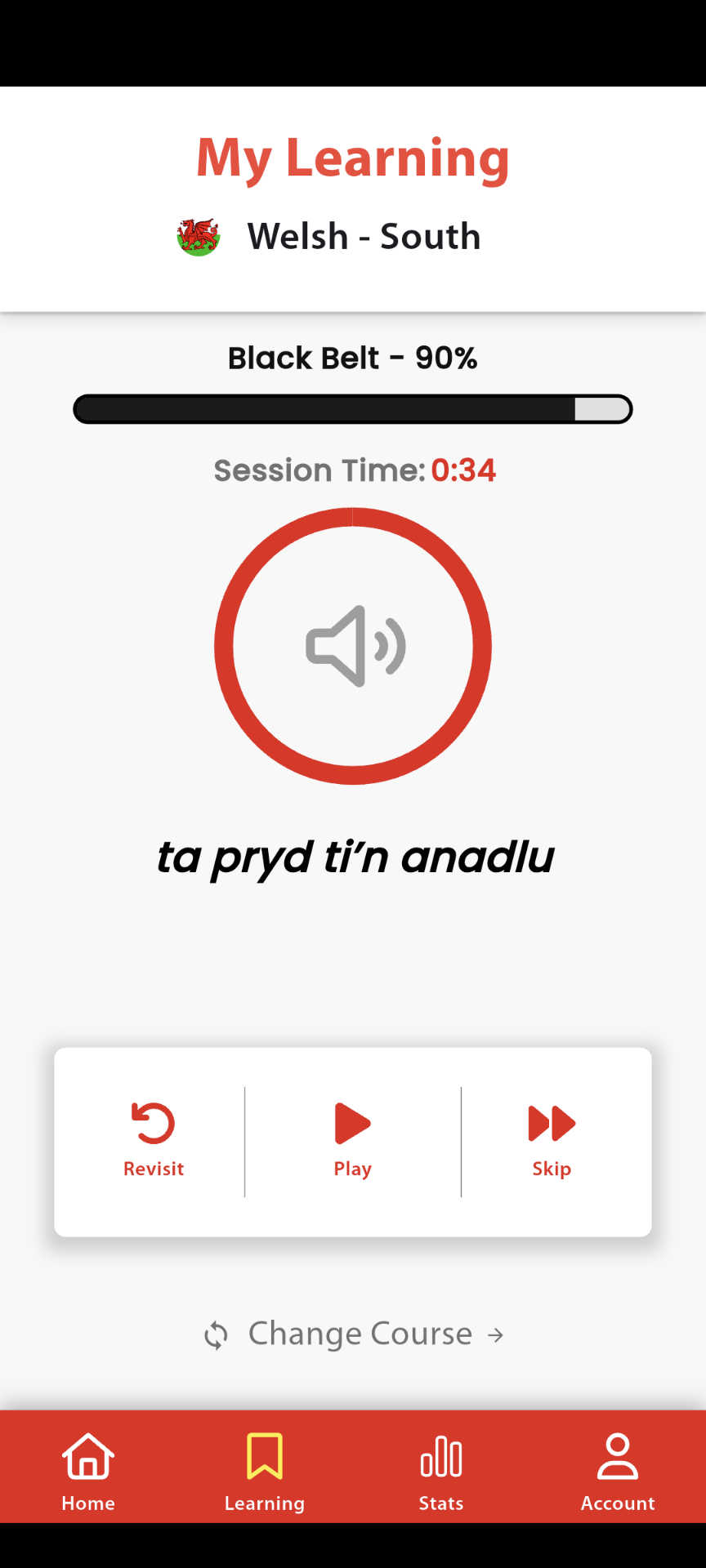
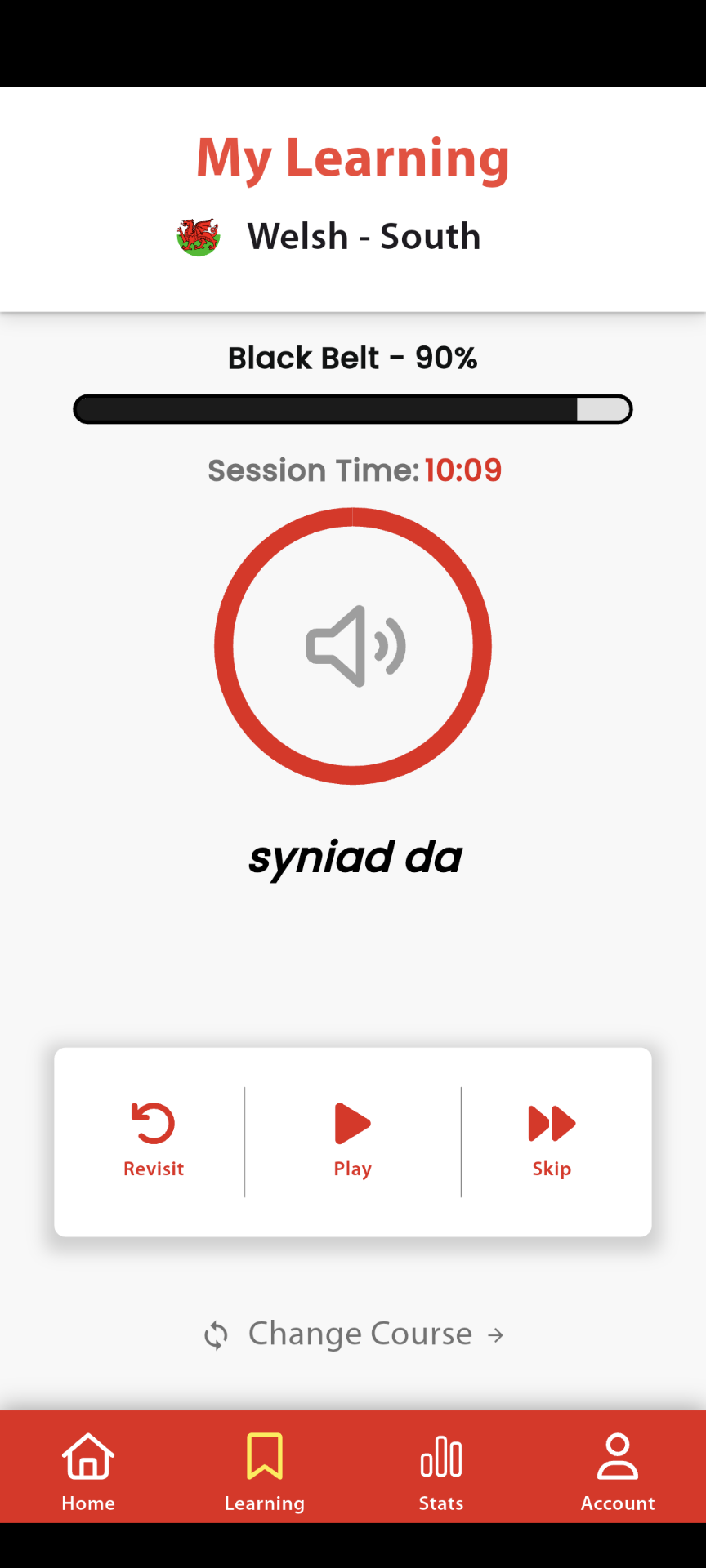
“Anadlu” (to breathe) appeared without formal introduction. It appeared later.
-
The phrase “syniad da” appeared earlier and then was formally introduced. As both syniad and da had been used extensively earlier in the course I was surprised it merited it’s own formal introduction anyway
-
In the third item the English voice was missing
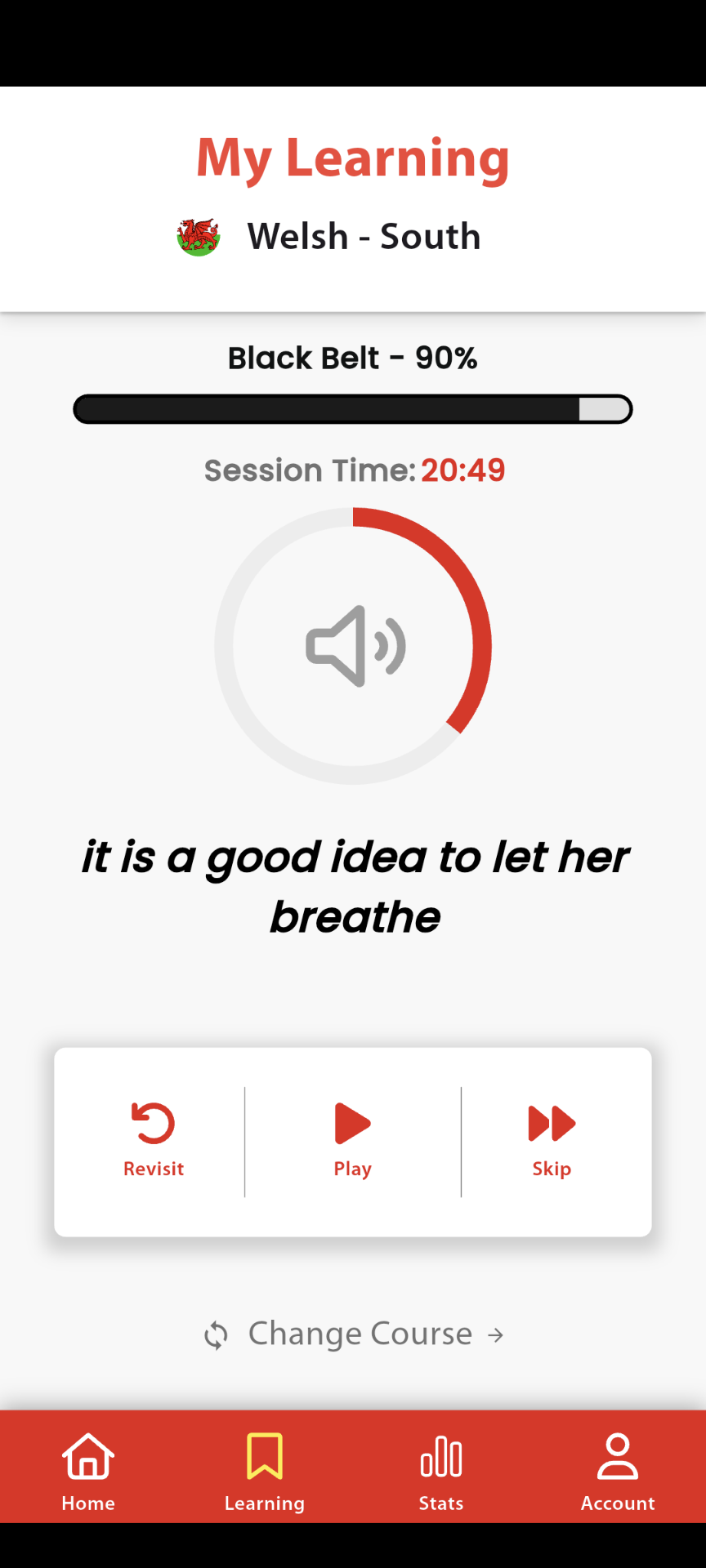
2 from today.
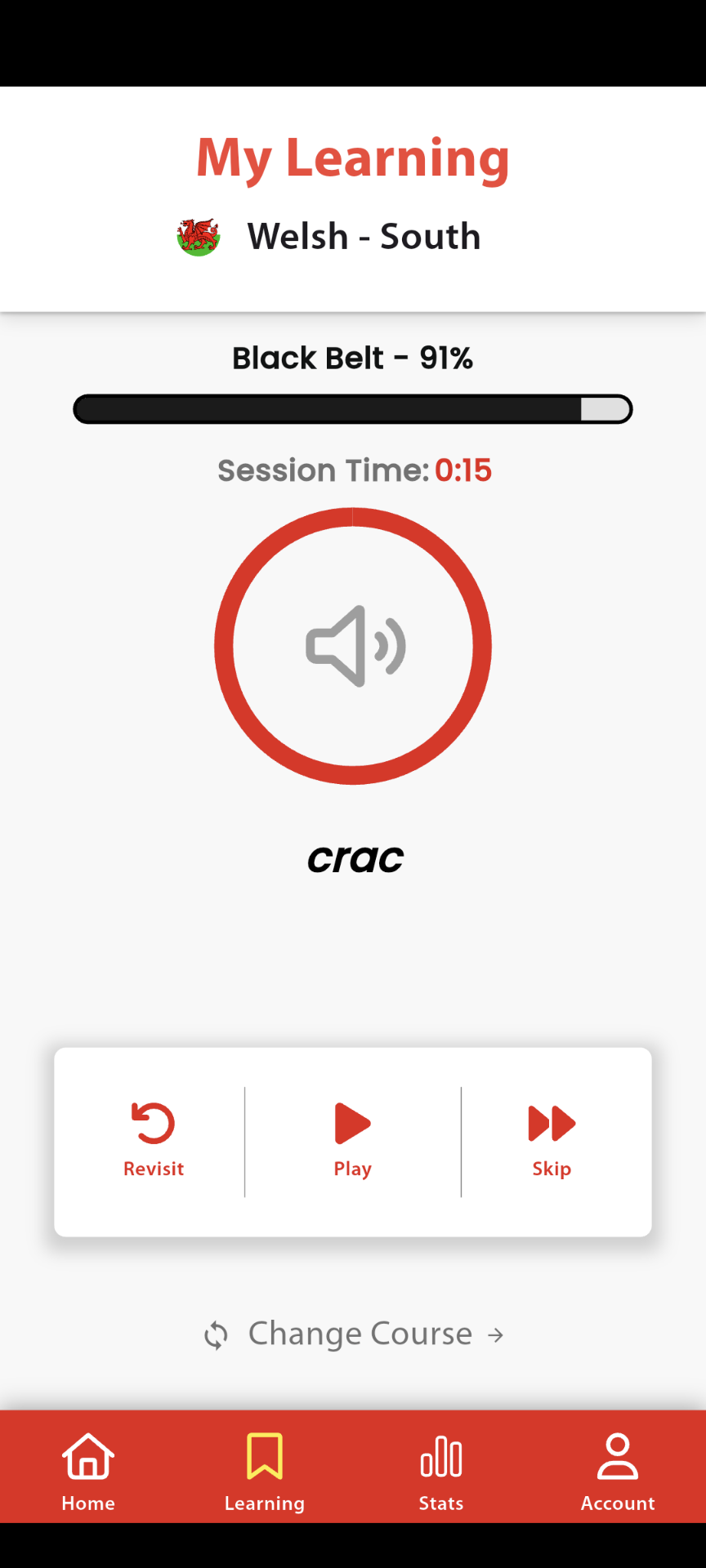
“Crac” (angry) introduced as if for the first time
But the “llygaid crac” have appeared many times throughout the Black Belt lessons.
The second is a silent English one
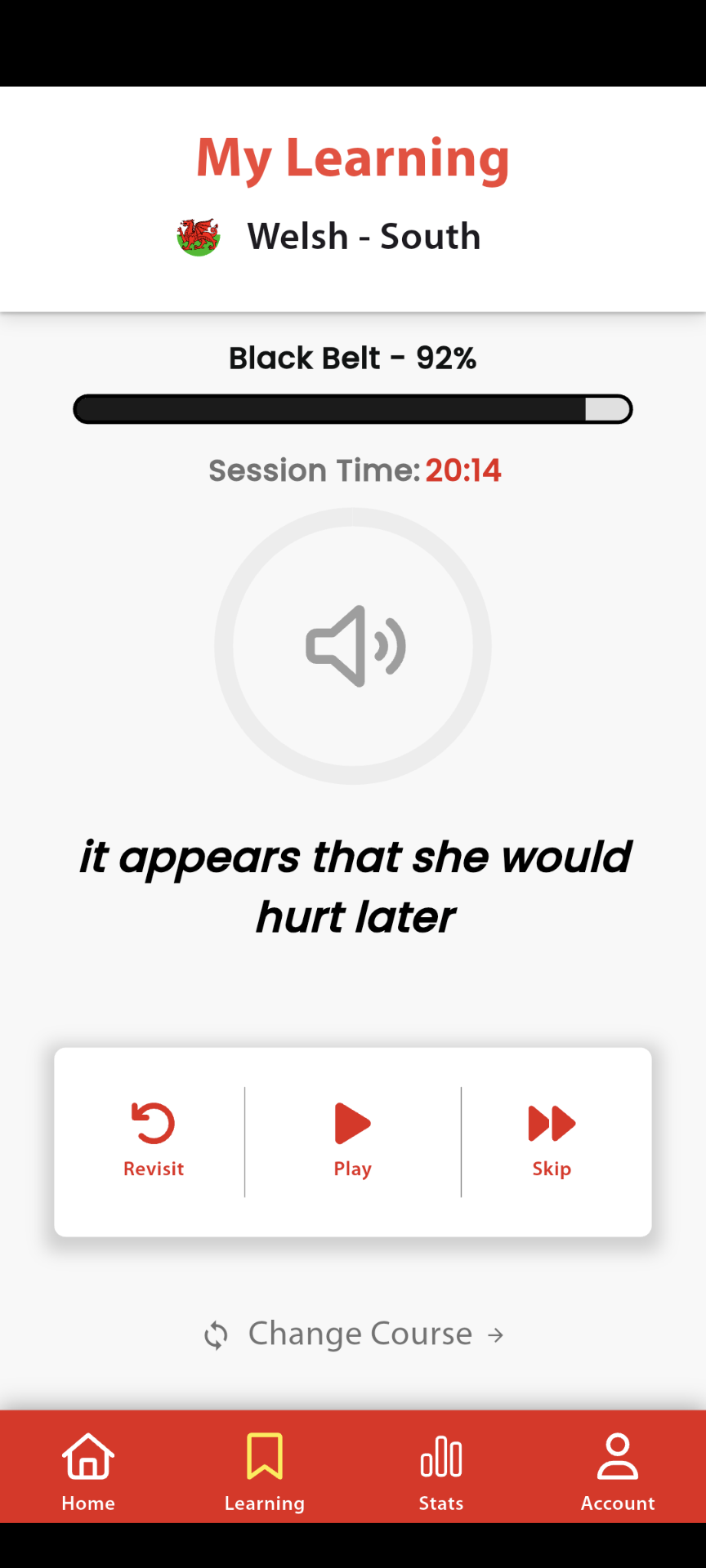
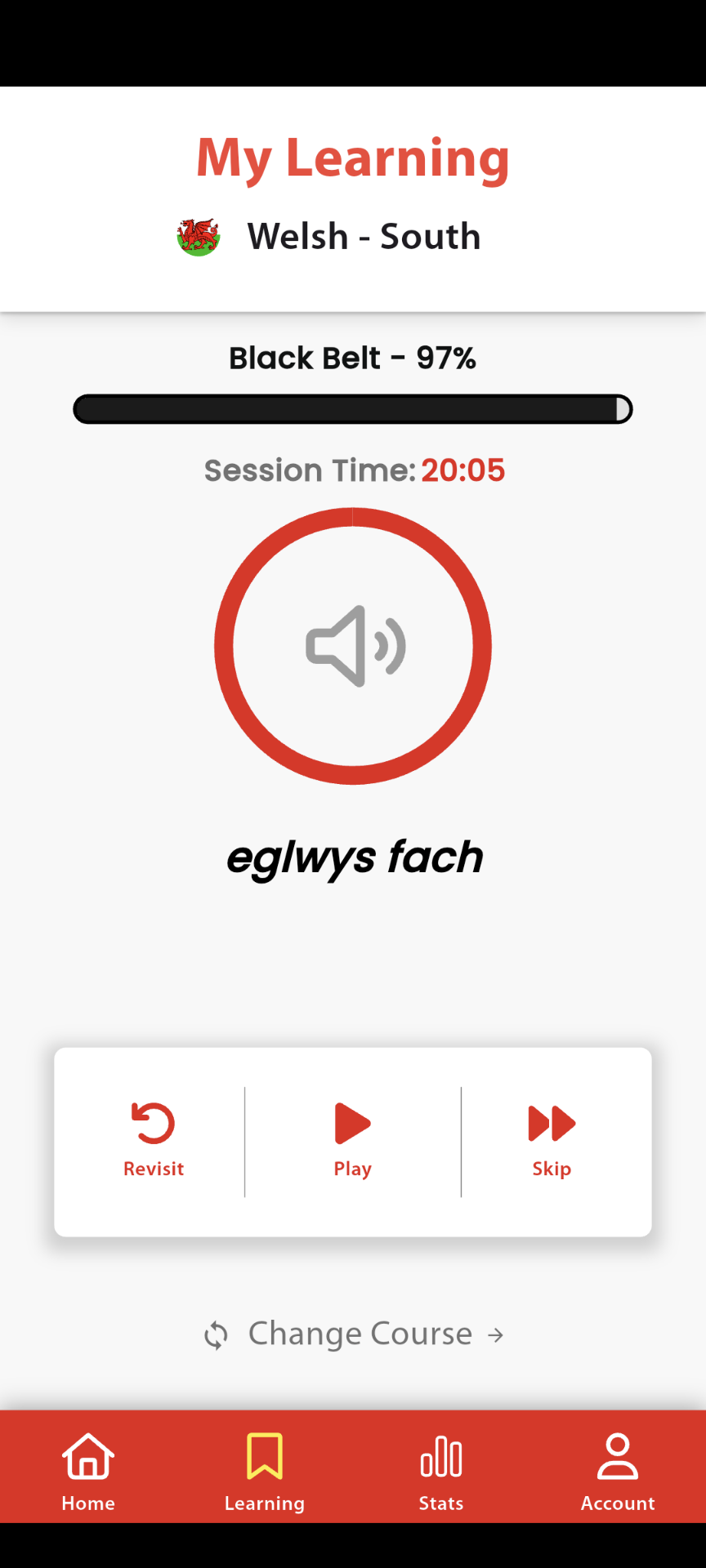
A few items appeared today without introduction.
Egwlys fach (small church,) although this would have been obvious to many
“Wedyn” with the meaning of “later” (think I may have seen nes ymlaen used before on the course). Not formally introduced yet.
Although it may seem obvious “at the mud” translated as “at y mwd”. Without prior knowledge I had assumed ‘i’r mwd’. Not formally introduced yet.
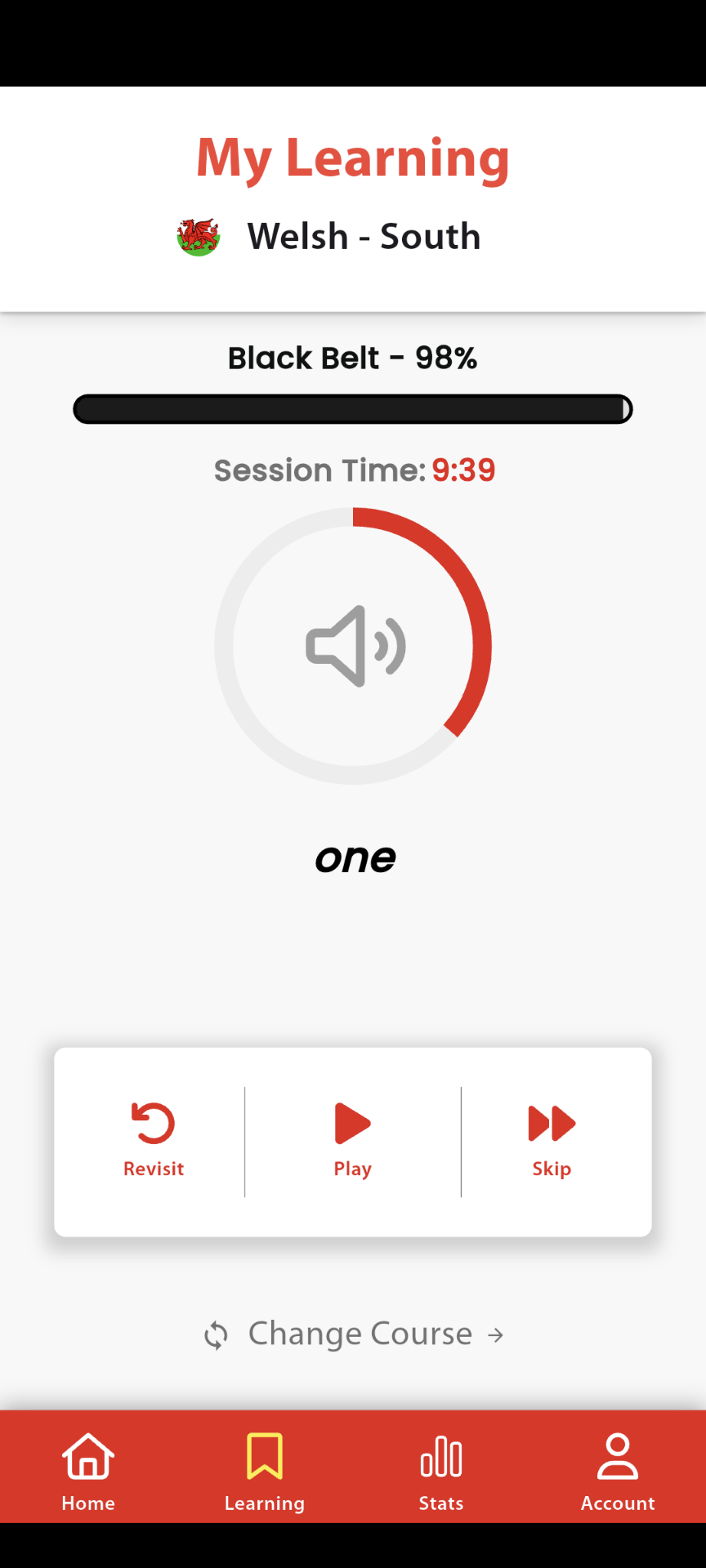
Today, “un” - “one” was introduced as if new. That was a bit surprising given the number of times “Mae gyda ni un bachgen’ ac un ferch” has appeared throughout the course.
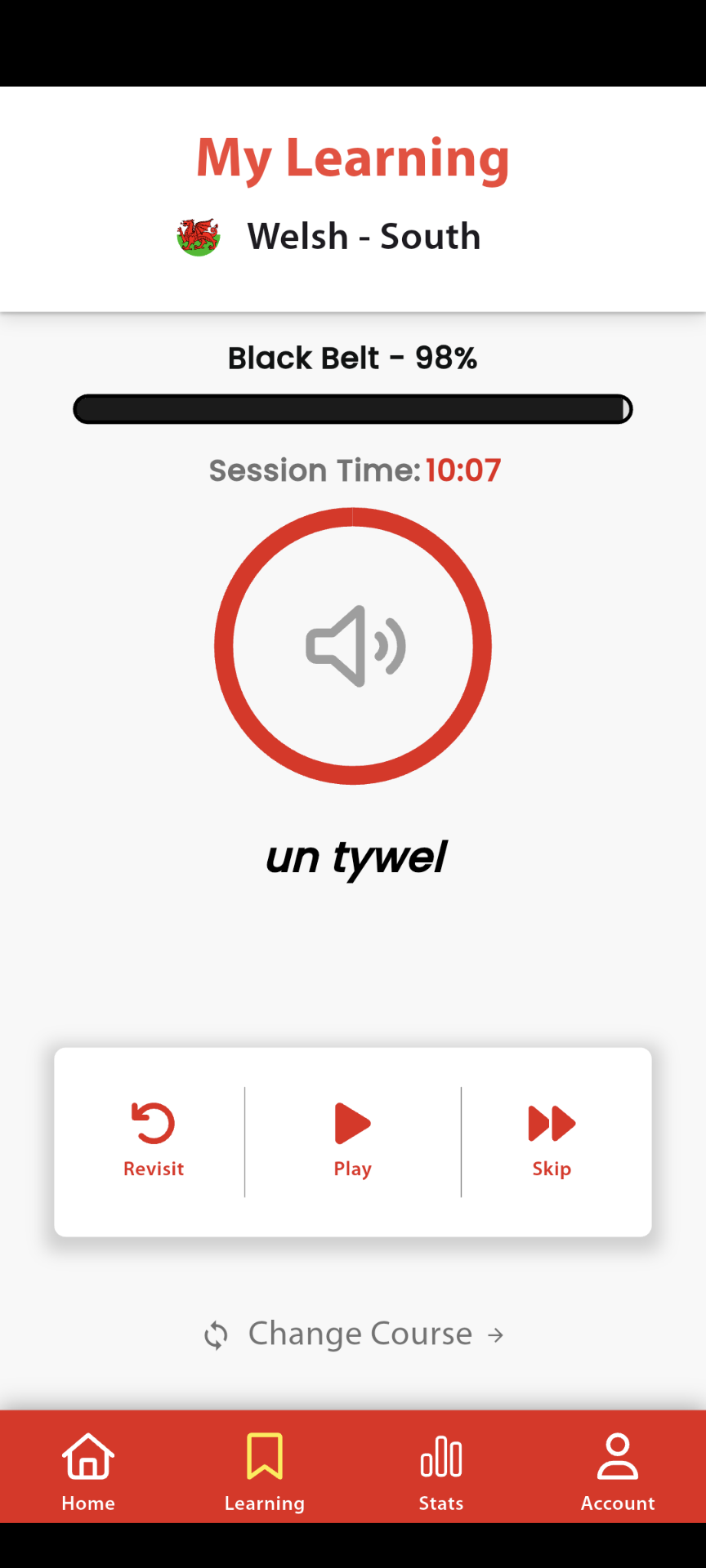
Then “un” was immediately coupled with “tywel” which at that point had not been introduced. (It was later)
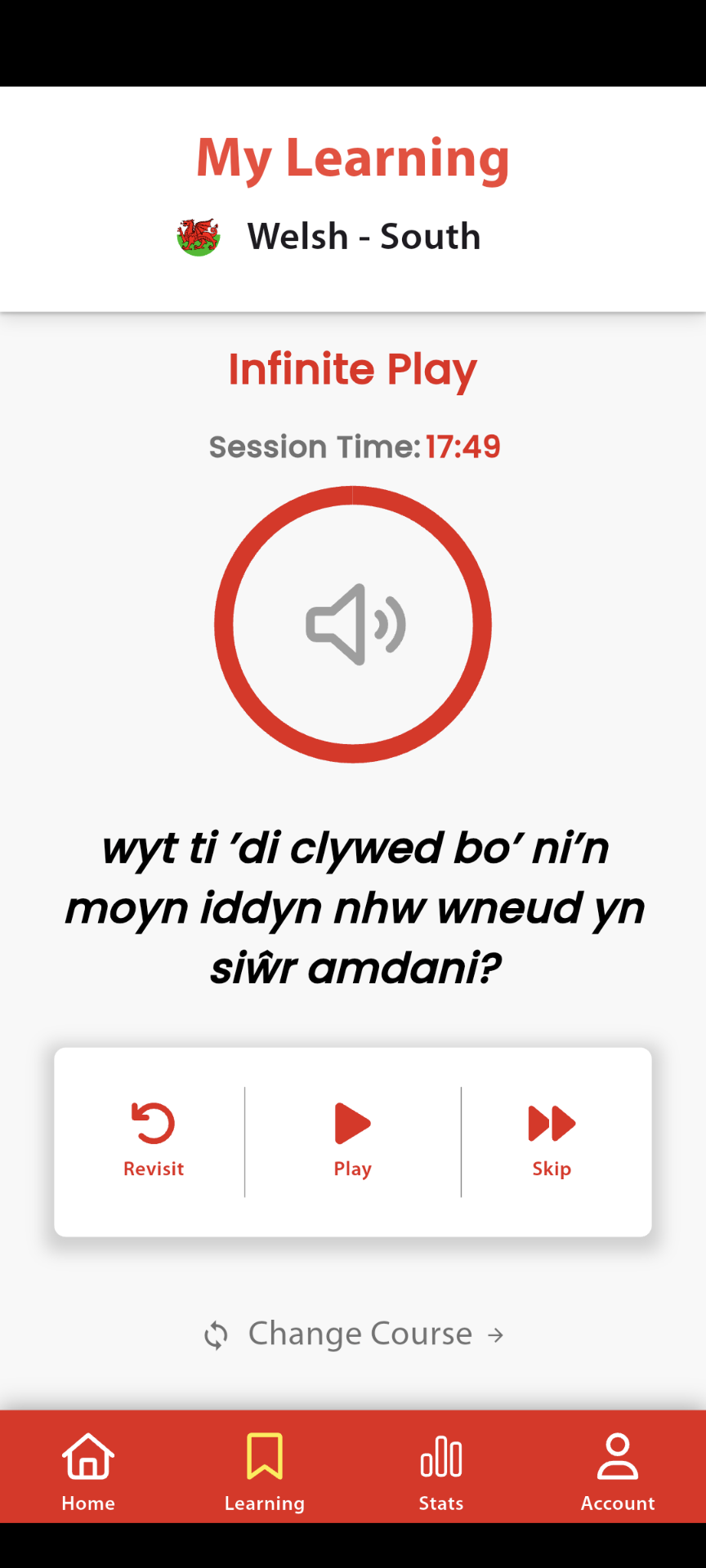
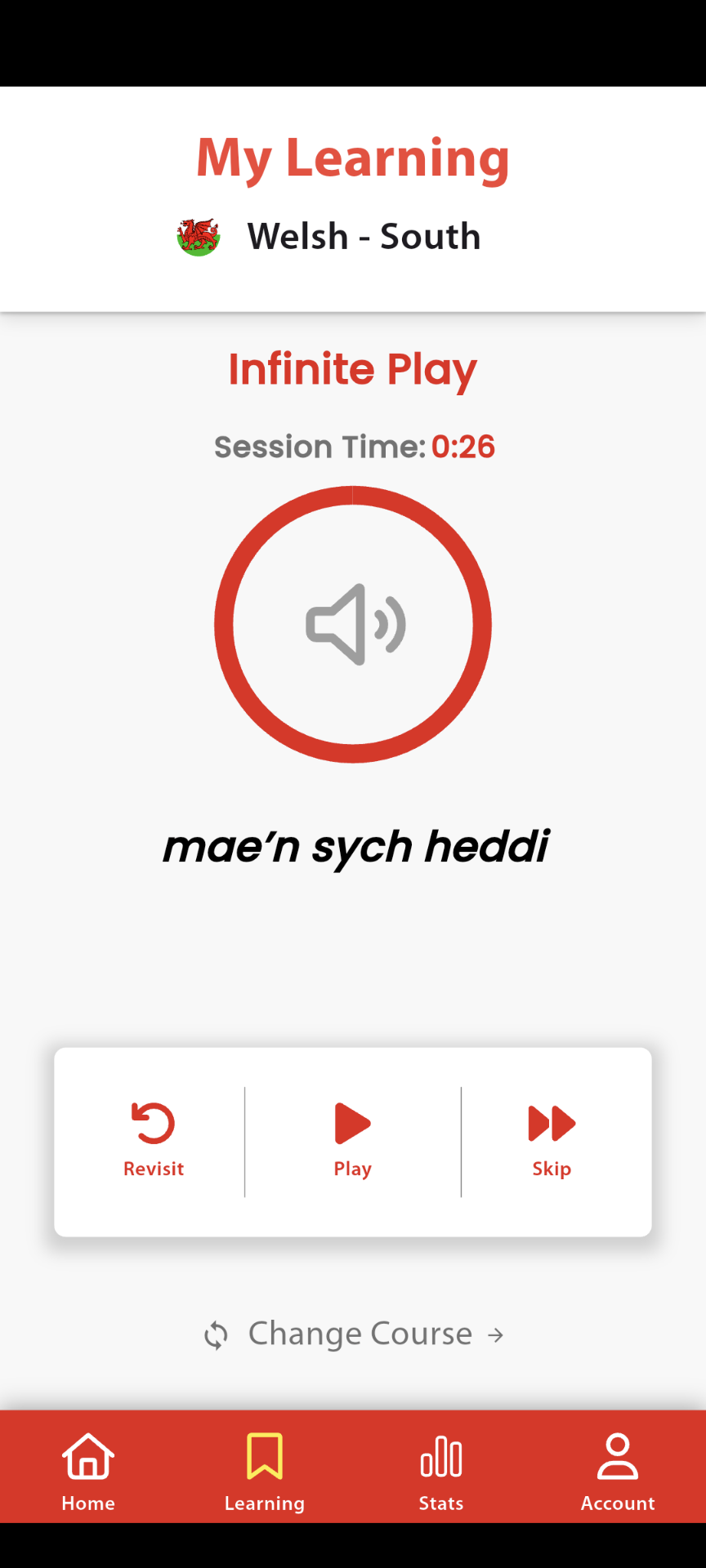
Started "infinite play " today so I guess that is the end of the surprises 
But…a new word was introduced formally although it had appeared before:
yn sych" for dry.
“Heddi” for “heddiw” was a free bonus.
"
1 Like
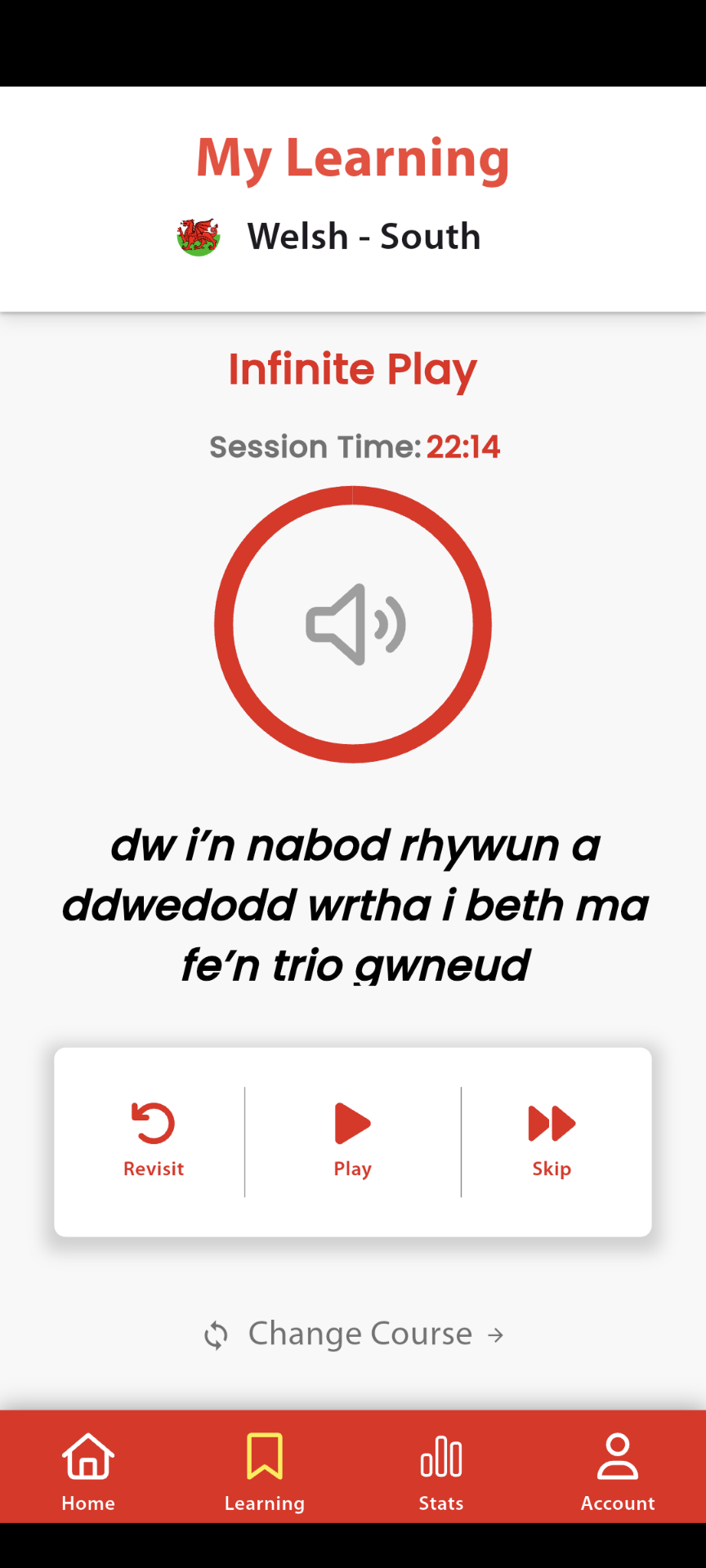
Today I came across something for the first time which I’m pretty certain had not been covered in earlier parts of the course.
The bit I’m referring to was (in English), “…someone who said to me…”.
In the course I seem to recollect “sy’n” has been used for something like “I met someone who knows you” “nes I gwrdd a rhwyun sy’n nabod ti”.
Here it offers “a dwedodd” for “who said”.
So dwedodd is in the past tense and I seem to recollect from somewhere else that you would not use “sy’n” then. Maybe “oedd” or “bydd” depending on tense.
But “a”?
My main gripe is that a learner would have no idea what to use here without prior prompting or introduction.
It’s a big assumption on my part that my reasoning around past tense and “a” is right, but I may well be wrong. Who can say?