Yes, they’re interchangeable in this context and are all valid.
2 Likes
To Siaron’s prompt and helpful response, I would add that in a more formal context the hon/hwn version is preferred (the person that edits my newsletter is always changing my yma to hon/hwn…) But in speech I agree that either is fine.
The beauty of using 'ma is that you don’t have to remember what gender the noun is, so it’s always what comes to mind first for me!
4 Likes
Thanks Siaron, Sara! I thought so, but just wanted to check.
And yes, I tend towards the 'ma/'na construction because it’s just so much easier, but some phrases I seem to have learnt as a sort of single thing, probably fairly early on in my journey, hence the odd mismatch.
2 Likes
Ok, here with yet another question, this time about bird names.
Titw tomos las is a blue tit. Titw is masculine, Tomos is a man’s name, so why does glas mutate to las? Especially when other bird names, such as the great tit, titw mawr, or titw cynffon hir, the long-tailed tit, do not mutate.
This may be a historic artefact, as I haven’t seen any strict grammatical rule for this, but sometimes, adjectives following a male name are unintuitively mutated, especially for historical figures: Llywelyn Fawr, Barti Ddu, Owain Lawgoch off the top of my head. Although I can’t think of a counterexample right now, I vaguely remember that this behavior isn’t 100% consistent.
Although “Tomos Las” doesn’t appear to be a historic figure, I think the same mutation convention seems to be at work here, making “titw Tomos Las” literally the “Blue Thomas tit”.
6 Likes
Thank you, Hendrik! This has been driving me nuts all afternoon! Your explanation does make sense, yes.
1 Like
Glad I could help, but ever since your question I can’t seem to shake that song!
("Titw tomos, titw, titw tomos, titw tomos las.. titw tomos, titw, titw tomos, titw tomos las!  )
)
3 Likes
I’m sure @Hendrik is right about this, Suw 
3 Likes
I think I’m right in saying we mutate ordinary nouns and (Welsh) place names, but not personal names or company names.
So, what about Gweplyfr? Do, we treat that as a company name? Or as a “place” on the web? Do I doomscroll ar Gweplyfr or ar Weplyfr? Is ar the correct preposition?
And while I’m asking, what is “doomscrolling” in Welsh?
Really asking the important questions here!
I would class it as a company name and go with ar Gweplyfr (after all, I wouldn’t say “nes i dod o hyd iddi ar Ŵgl” when referring to Google).
I’ve not heard a translation for doomscrolling in Welsh - although I’d guess that dŵmsgrolio is most likely to be heard!
4 Likes
Thank you! I can finally tell people what I do all day! 
2 Likes
Sorry, me again.
I had thought I had got all this after your explanation.
But in this example (albeit it’s a negative), why is the second part of the sentence “nag o’n nhw’n moyn” and not “nag yn nhw’n moyn”?
From your explanation, I had understood the part starting with “bod/nag” would be understood to be in the past from the first part “dweddon nhw”.
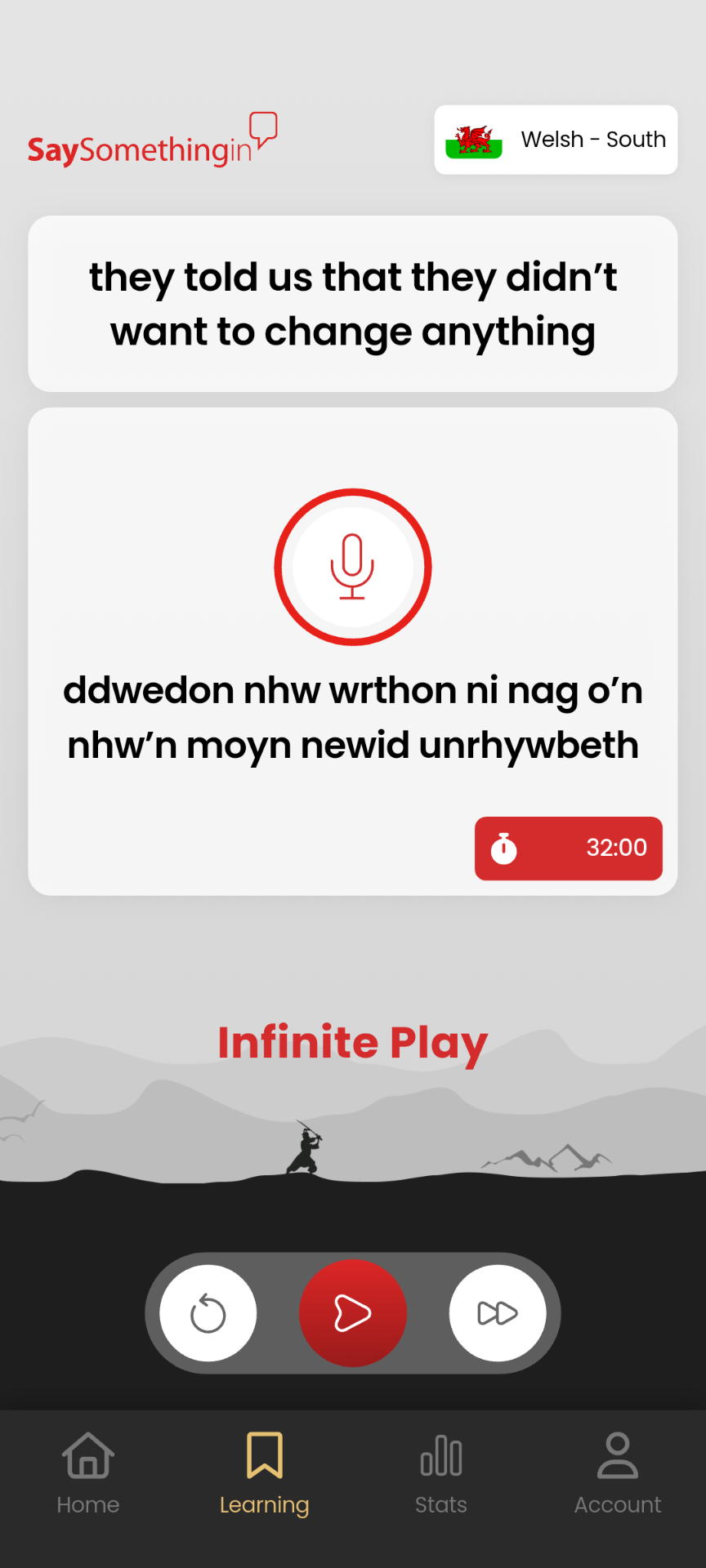
It’s a subtle thing. At the moment in the past when ‘they’ said it, they weren’t saying “we don’t want to change anything” but their statement was more like “we didn’t want to change anything” so the Welsh reflects that. When they made the statement, it was already in the past.
It’s not really possible from the English to tell which is meant, so it’s fine whichever you say.
2 Likes
Thanks. I like your last sentence.
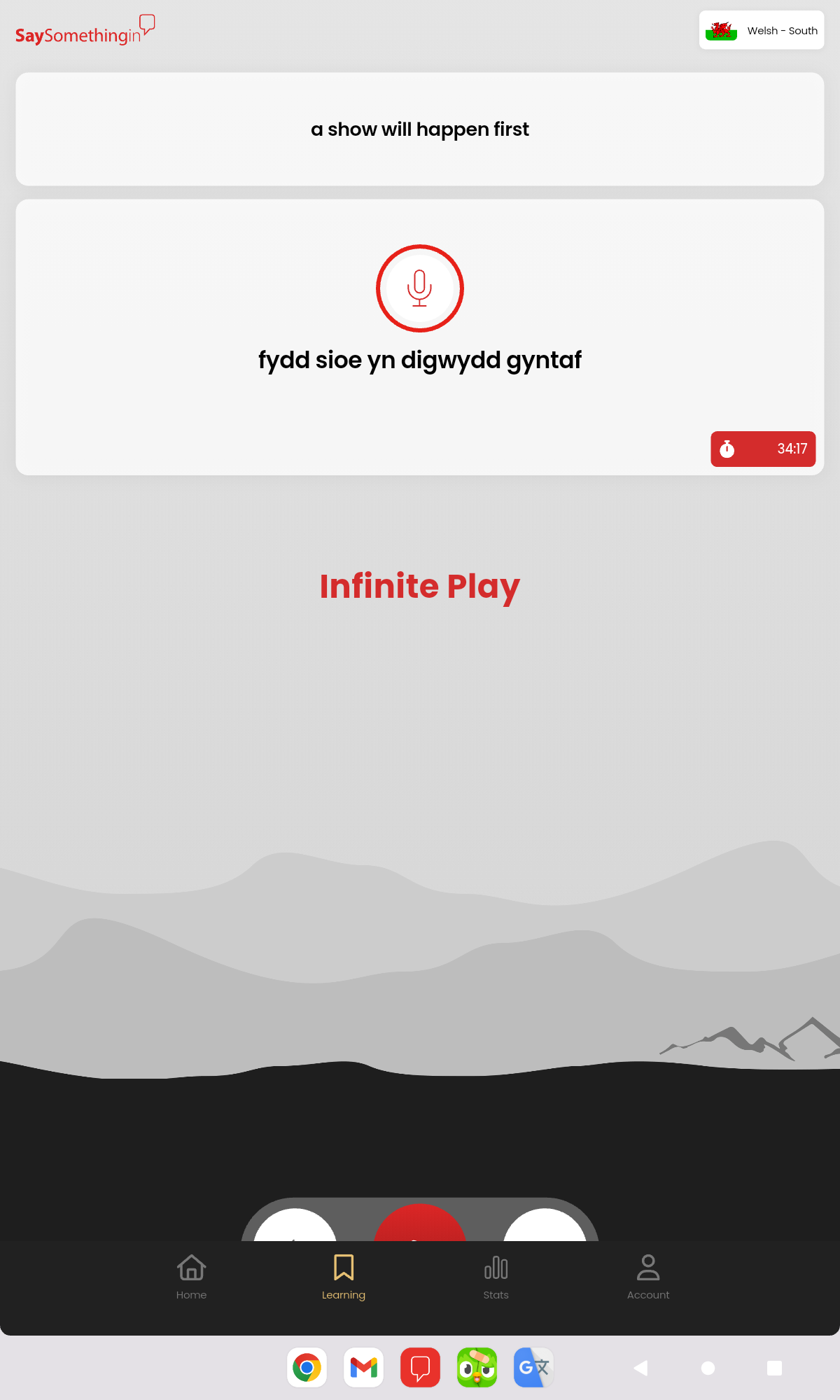
Inflected verbs can be used with an affirmative particle, mi or fe, which both cause soft mutation. But then sometimes that particle is dropped, leaving just the soft mutation behind. So these are all legit affirmative statements:
- Mi fydda i.
- Fe fydda i.
- Fydda i.
- Bydda i.
It’s one of the languages’s little quirks.
3 Likes
Nouns in apposition are regularly softened - Ioan Fedyddiwr for John the Baptist, for example - and I rather think that some of these examples with adjectives work the same way. Certainly we can translate Llywelyn Fawr as Llywelyn the Great, and Barti Ddu as Barti the Black, which seems to fit the pattern of John the Baptist.
1 Like
Thanks for your reply.
I see what is going on here.
The issue I have here is with SSIW.
How on earth would a learner know this from the material presented so far?
Virtually 99% of the examples use an unmutated form of future bod (the only exception I can think of being the “fydda I byth yn caru…” pattern and I had assumed that was a quirk related to the use of “never”).
So a learner like me, when presented with an example like this can only assume:
A) I am wrong for using “bydd” - but I don’t know why
B) SSIW is wrong - but apparently it is not.
So this leaves the question, assuming SSIW is right, what pattern does the learner use going forward both in SSIW translation and in real life?
Do I switch to a mutated form, or stick with what I’ve leant so far.
The lack of examples in the material suggest that the mutated form is infrequent - compared to something like “alla I” instead of “galla I” which occurs frequently.
I cannot remember Aron saying something like "you may hear this as ‘fydd’ "when the form was introduced.
Once again, thank you for explaining this to me.
Croeso, Nigel. And yes, it is confusing that there can be so many correct ways to say the same thing!
Much as I love SSiW, I do think it helps if you can get a grammar book to supplement your learning. It is a tragedy that Gareth King’s books are so expensive, as I really do think they are the best. If you can find a copy of Colloquial Welsh for a reasonable price, I think you’ll find it will help a lot.
2 Likes
The thing is, in real life, you’re going to hear a lot of variation, so by the time you get towards the end of SSi material, you will the occasional example that makes you stop and ask what is going on here? But that’s what you’ll get with Welsh speakers too.
If you’re in a Welsh-speaking area, the best advice is always to listen to what people use in everyday conversation. If you’re not, but you have a favourite S4C programme or an announcer you like on Radio Cymru, pattern your Welsh on the way they speak, but once you get as far as you have, you can be confident that what you come out with is going to be a perfectly acceptable alternative a lot of the time. The language is becoming your own now. Don’t be afraid to decide what YOU like to say, and go with that. There is so much variation across Wales, you’ll be ‘right’ somewhere
3 Likes