Are you looking at it on the website? Not all of the recordings have translations, so you need to look at the links for the individual interviews to see which ones do.
I’ve just come across this construction: Ar ôl i’r ŵy gael ei ffrwythloni (After the egg has been fertilised), and am a bit confused by it. Why is it not Ar ôl mae’r ŵy wedi cael ei ffrwythloni? And how do I recognise when to use i’r… gael ei… and when to use mae’r… wedi cael ei…?
It’s one of the various adverbial structures which use a form of “i”. Perhaps you’re more familiar with phrases like cyn i fi fynd “before I go”, or ar ôl i fi gyrraedd “after I arrive”.
This is the same structure, e.g. ar ôl iddo fe gael ei dalu “after he got paid” - ar ôl i’r bachgen gael ei dalu “after the boy got paid” - ar ôl i’r ŵy gael ei ffrwythloni “after the egg got its fertilising” (after the egg has been fertilised).
3 Likes
The parallel to cyn i fi is really useful, thank you!
1 Like
For the life of me, I can’t work out why
“I said that he doesn’t want to talk to me until next week”
Translates as
“Ddwedes I nag oedd e’n moyn siarad gyda fi nes wythnos nesa”
Where does the imperfect “oedd” come from?
Thanks.
Apologies if this is in wrong place, am confused why sometimes there is iddyn nhw in a sentence, not just nhw? Eg I don’t want them is just nhw, but I’m going to ask them is iddyn nhw?
Think of how you’d say “He didn’t want to talk” - doedd o ddim yn moyn siarad.
Because you’ve got a “that” in there, you need a negative ‘that’ - nag
The nag cancels out the ddim, so for “…that he doesn’t want…” becomes …nag oedd e’n moyn…
Does that help?
1 Like
Because in “I’m going to ask them”, gofyn is followed by the preposition i which turns into iddyn when followed by nhw.
In “I don’t want them” there is no preposition i, so there’s no iddyn.
1 Like
Thanks for replying. But it’s not the “nag” that’s confusing me. It how an apparent present tense statement “he doesn’t” translates to an imperfect “oedd”. On today’s daily revision I saw a string of these which I can’t recollect seeing before.
Thanks again.
To translate that English sentence I wouldn’t use oedd. I would say Ddwedes i nag yw e’n moyn siarad gyda fi .. unless the English said “I said that he didn’t want to talk to me” so possibly it’s a mistranslation that has slipped through? What colour belt are you on? Or is that from one of the older audio files?
Yes that is what I thought hence my question and confusion.
I’m on black belt, automatic, daily revision.
I’ve enclosed screen prints for reference.
For further info, I’ve not seen any patterns containing “…YW e’n…” in the entire course. Occasionally I think something like “…bod e ddim…” Has appeared for neg reported speech.

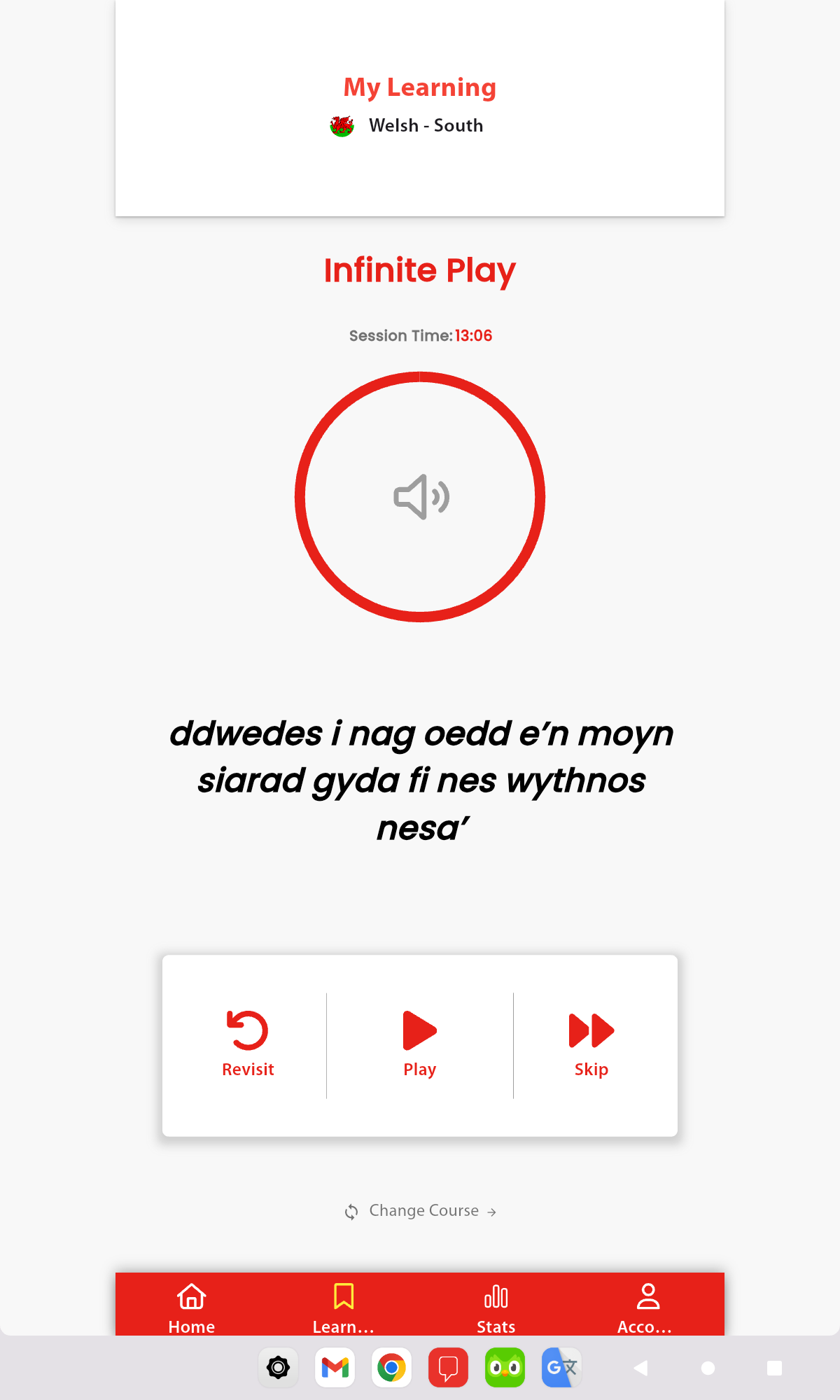
nag yw e is another way of saying fod e ddim, so you can say ddwedodd e nag yw e’n dod or ddwedod e fod e ddim yn dod for “he said that he’s not coming”. I know you get quite a lot of practice with the nag ŷn ni (that we’re not) and nag ŷn nhw (that they’re not) at some stage in Black Belt, and I thought nag yw e was included in an earlier Belt.
Looking back at the audio files, in Level 2 Challenge 22 there’s a sentence dwedes i nag yw e’n moyn mynd nes i ni gwpla, so in theory it should have been included in the new app. Perhaps there needs to be a few more examples.
It does look as if some glitch has got into the AI. I thought I had seen a couple of these within the last 48 hours. Here’s another which appeared today. Having been using the infinite revision for several months now I can say with some certainty that these apparent bugs had not appeared before. Can they be fixed please as they threw me and I guess other learners? Thank you,
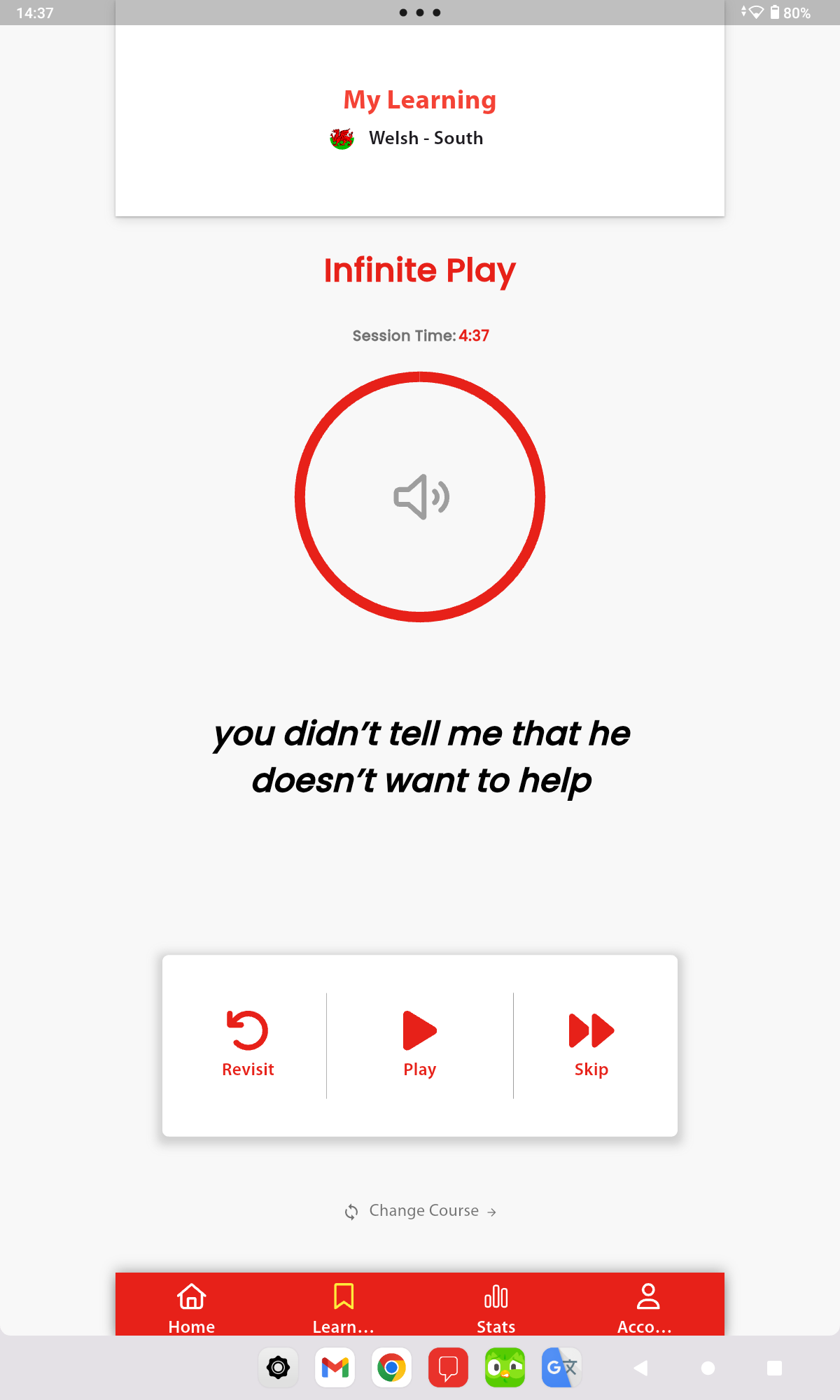
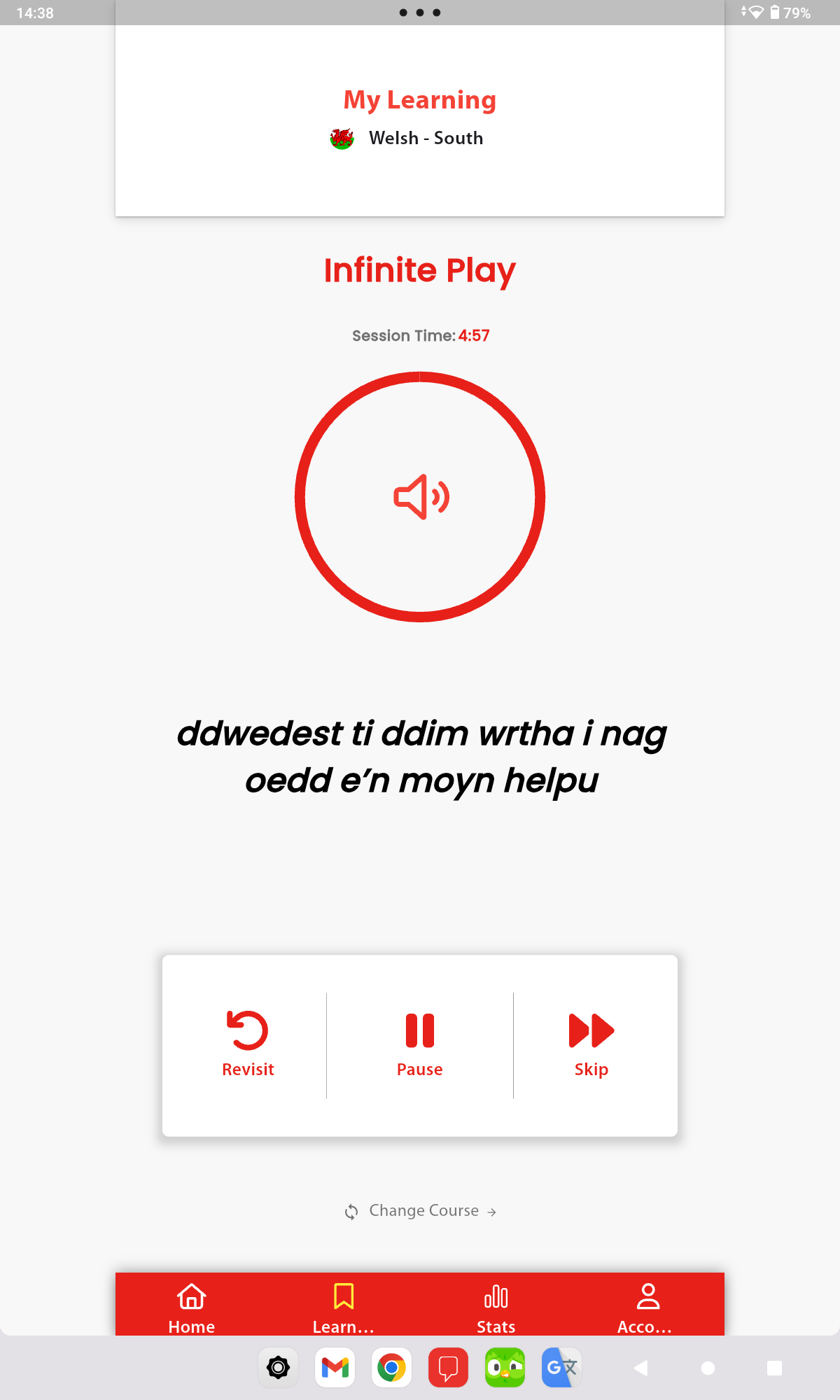
Gwych, that is explained well, thank you 
1 Like
@nigel-28 There is a new version of Level 3 South in testing at the moment - very similar but with some extra material - so I’ll keep an eye out for any of those.
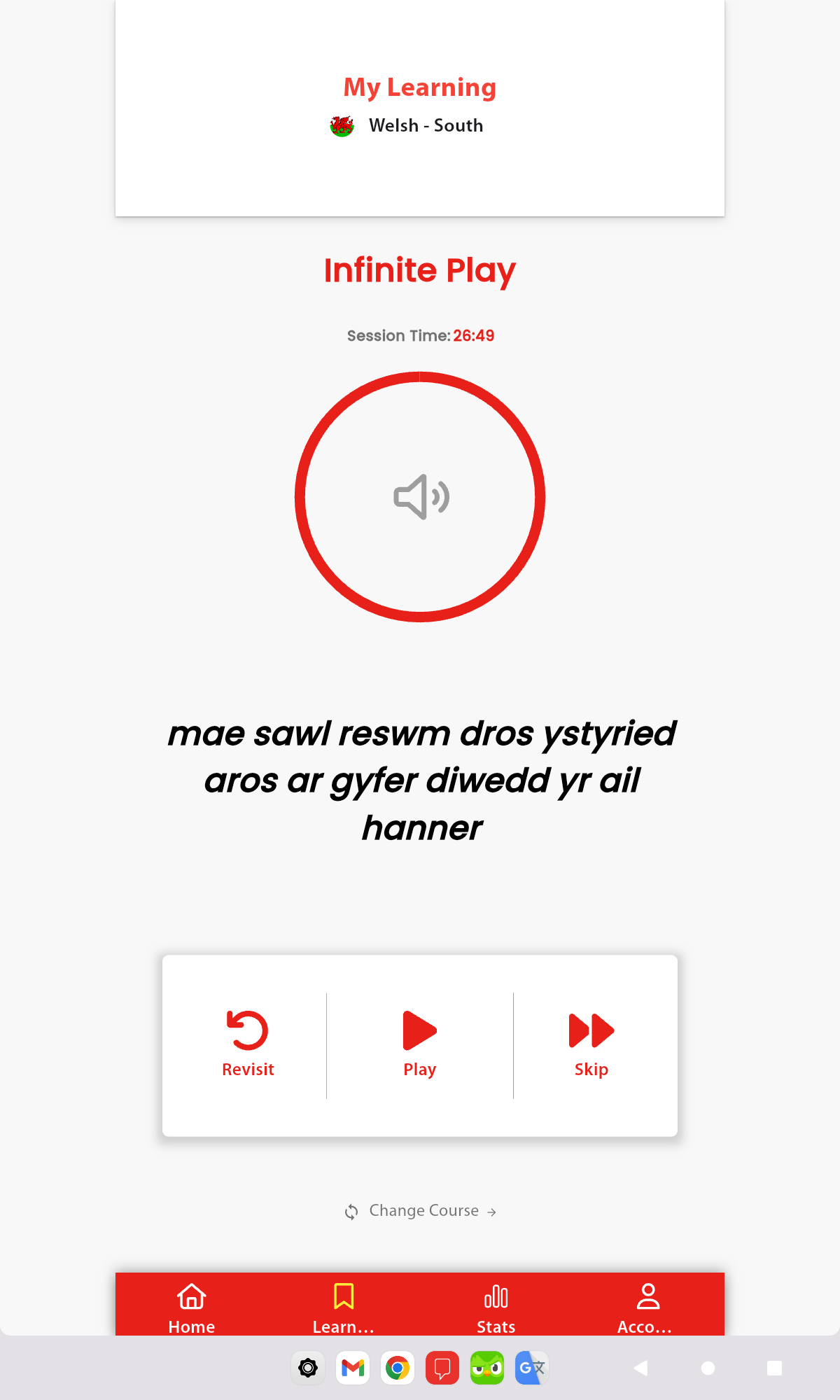
“ar gyfer” (for) has made it’s reappearance in the daily revision material after an absence of several months. I thought I had escaped it.
It’s reappearance has brought more confusion and angst.
I thought I was safe in using “am” for time periods.
So I had translated “waiting for the end…” as “am diwedd..”.
But as you can see here, SSIW has used “ar gyfer”.
As my understanding is clearly now in tatters, I’d appreciate some more help on what is going on here. The"for the benefit of" meaning when using “ar gyfer” didn’t seem to fit.
Thanks
There is a certain amount of overlap at times with expressions like am and ar gyfer. I would tend to use am in that situation, but they’re both acceptable. It’s a sign that your Welsh is becoming natural when you produce alternatives.
Out of curiosity I posted “there are several reasons to consider waiting for the end of the second half” into Google Translate and DeepL to see what they would give.
Google Translate gave: mae sawl rheswm dros ystyried aros tan ddiwedd yr ail hanner going for “until” as a synonym for “for” in this situation.
DeepL (which has Welsh as a language in Beta) gave: Mae sawl rheswm i ystyried aros am ddiwedd yr ail hanner
As you progress you’ll find that as long as what you say gives more or less the same meaning, it’s fine to say something a little different. Translating from one language to another is never an exact science, but more of an art of interpreting intention.
3 Likes
Thanks for your encouraging reply!
1 Like
There is…
Mae or Dyna, or doesn’t it matter?
Thanks
Yes, it does.
Mae just introduces a general statement of the existence of something, e.g. Mae ci yn yr ardd - “there’s a dog in the garden”
Dyna draws attention to something - Dyna’r ci naeth palu’r twll yn yr ardd! “There’s the dog that dug the hole in the garden”
4 Likes