I came across this one the other day and it confused me. Can anyone help me understand the purpose of the additional “yn” between “ni’n” and “gwybod”? It seems a bit superfluous. It’s only when I saw the translation that I picked it up, not apparent from the spoken words. Thanks.
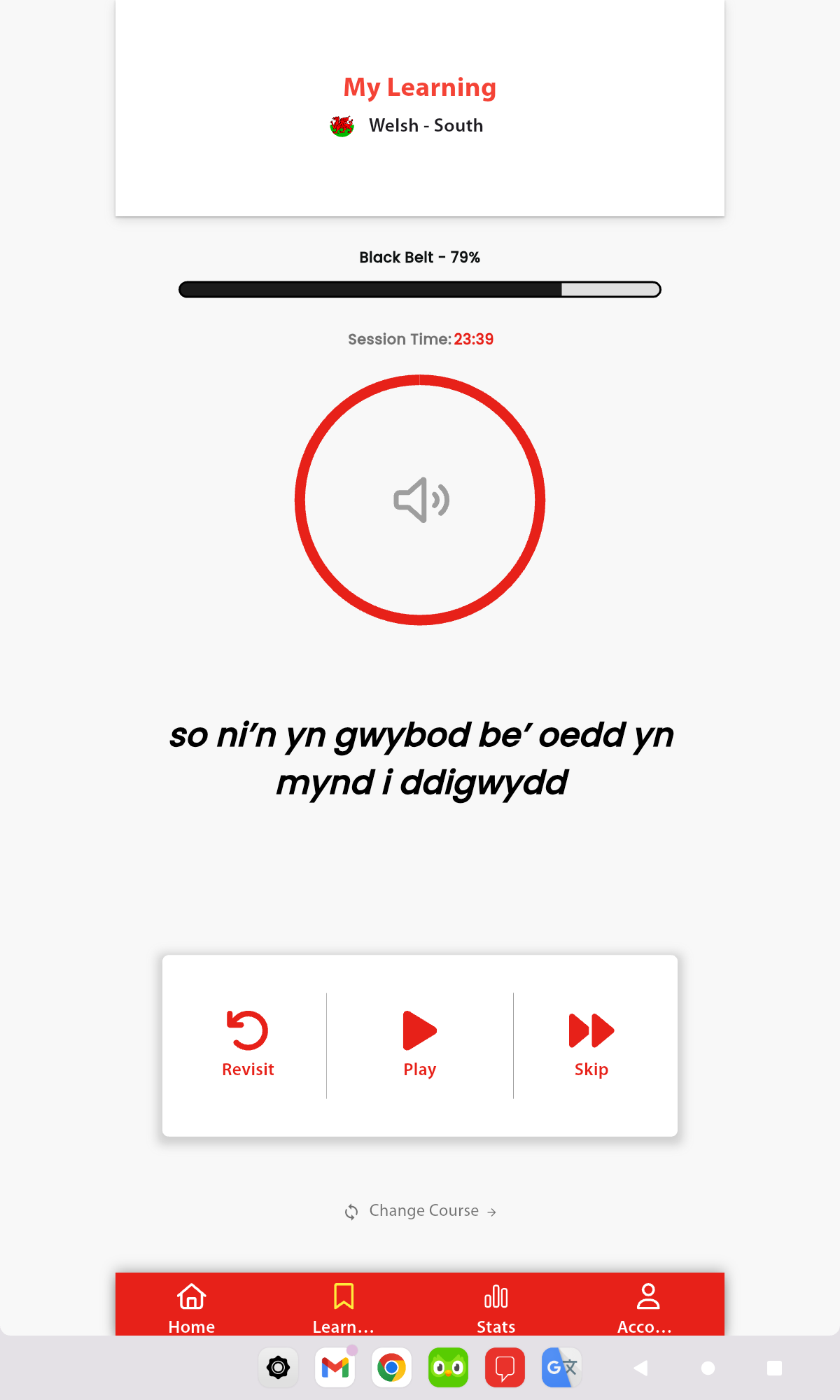
You’ve got two verbs there, with two different subjects, so each verb-noun gets its own yn:
So ni’n gwybod - we(S) aren’t(V) knowing(VN)
beth oedd yn mynd - what thing(S) was(V) going(VN)
i ddigwydd - to happen.
ETA - I haven’t done the southern course, so I’m not wholly sure of the tense of so ni’n: I’m taking this to be “We don’t know what was going to happen.” If So ni’n can cover the past, it might be “we didn’t know”, but everything else is the same.
Short answer: Yes.
But I believe that all mutations other than soft are increasingly felt to be a bit weird, fussy and literary, so you’ll encounter exceptions from first language speakers. I don’t know if this is more likely to be bad Street Welsh or bad Google Welsh. (Or perfectly good Street Welsh.)
Hi Richard, it’s the “yn” between ni’n and gwybod I’m referring to i.e. “so ni’n YN gwybod” I would have thought “so ni’n gwybod” was enough (southern course, “we don’t know”)
Blimey - I so didn’t expect it to be there that my eyes skipped over it! (Despite it being clear from your post that that was your point.) - You’re right, it’s a typo, I’m inattentive!
1 Like
Diolch @nigel-28. There’s a collection of things that need looking at in Welsh South Black Belt at Introduction of new words and phrases (Welsh South) so I’ve copied your screenshot there.
1 Like
I do apologise, I believe I have asked this before.
Why I’d wrtha fi sometimes replaced by wrtha i?
I haven’t been able to work it out, so have to ask a grown up  .
.
Diolch
It’s often just personal preference - you can have wrthaf i, wrtha i, wrtha fi (and the 1st and 3rd options sound the same) - so take your pick 
Thank you, i realised I’d missed off the wrtha’f’.
So the course is offering it for variety, because we have to be able to adapt to people who aren’t Catrin or Aran  .
.
2 Likes
So we’ve got “mae gen i” and “gest ti” introduced early on as ways to speak about possession, and now I’ve come across “chest ti ddim” with the mutation. I had assumed that these were all forms of the same verb, but I can’t seem to understand exactly the paradigm.
Am I correct, after a bit of research, in understanding that “mae gen i” is not a conjugated form of cael like gest ti and chest ti ddim, but one of the conjugated prepositions? Am I right as well in thinking you’d tend to use the preposition for present tense and conjugate cael for past (and I guess future, which I haven’t come across yet)? Or am I just overthinking it and confusing myself? 
No, not quite.
Although we ‘translate’ it as “I have”, the mae gen i construction is literally saying “there is xxx with me”, so the more correct ‘translation’ is “I possess”. The past tense would be oedd gen i, and the future bydd gen i.
When we use any form of the verb cael and ‘translate’ it as “to have”, e.g. Ces i amser da - “I had a good time”, in Welsh we are actually saying “I received a good time”, not “I possessed a good time”.
Where the confusion lies is that in English we use the single word “have” in a broader sense, but we don’t do that in Welsh.
4 Likes
Until recently, I hadn’t actually understood that it was cael at all, as on the Gog course it sounds like “ges i” rather than “ces i”, so I was thinking it was all conjugated prepositions that were used. It wasn’t until I hit “chest ti ddim” and started to wonder about that mutation that I realised it was a separate verb at all.
What’s more natural? Ces I, or oedd gen i?
1 Like
They are not interchangeable, so it’s not a question of being more natural.
If you’re talking about a possession, you need oedd gen i - e.g. oedd gen i gar - I had a car
If you’re talking about about something that isn’t an actual possession, you need ces i e.g. ces i ddamwain mewn car - I had an accident in a car
2 Likes
Does that only work in past tense, or is it present as well?
Ces is the past tense, yes. If you’re currently crashing, you can say Dw i’n cael damwain.
1 Like
All tenses.
mae gen i gar - I have a car
oedd gen i gar - I had a car
bydd gen i gar - I will have a car
dwi’n cael lifft mewn car - I’m having/getting a lift in a car
ces i lifft mewn car - I had/got a lift in a car
caf i lifft mewn car - I will have/get a lift in a car
4 Likes
Diolch i bawb 
1 Like
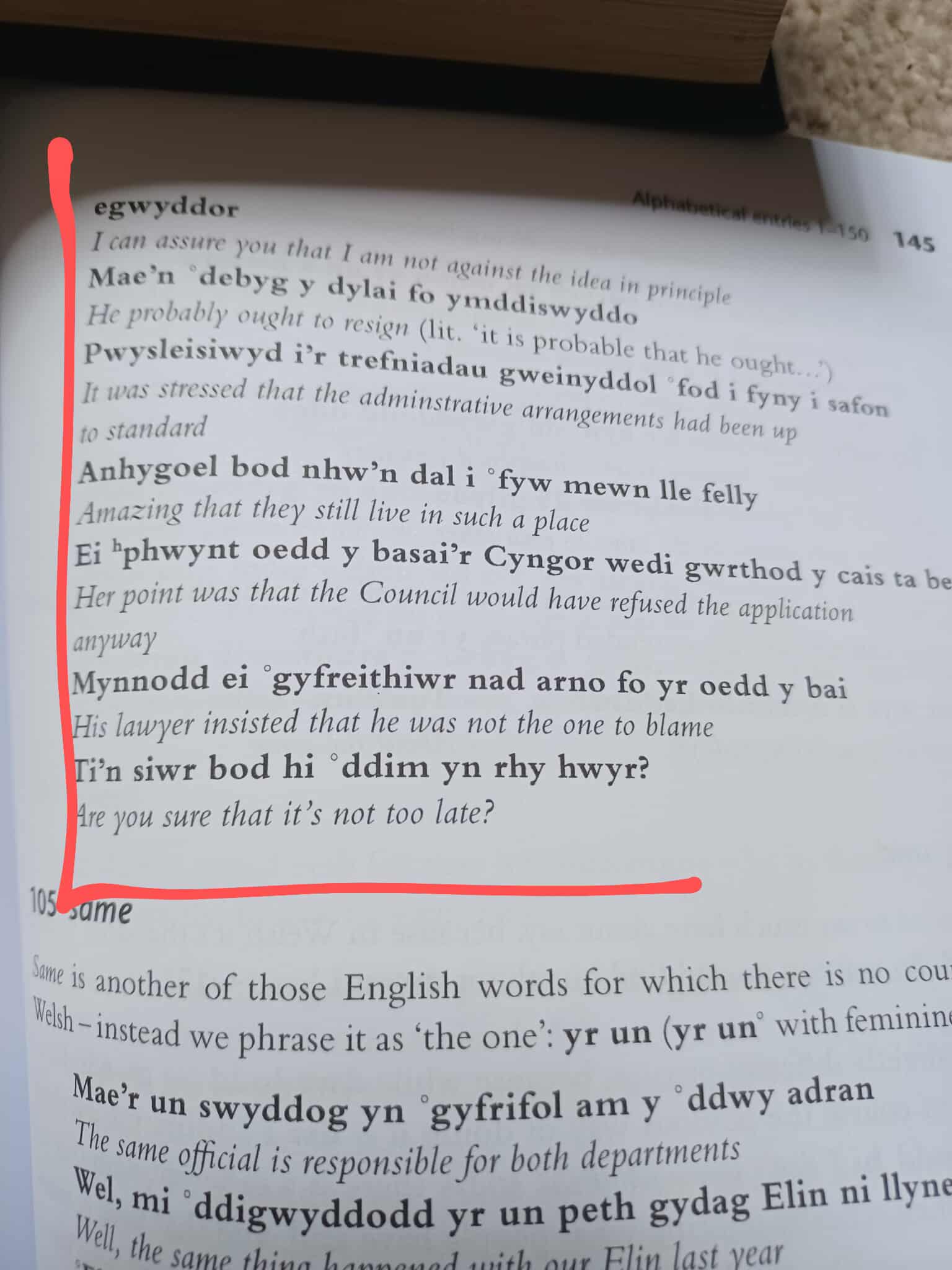
As do many, Nigel - you are not alone. The attached are therefore to be taken as a public service announcement rather than a shameless piece of self-publicity…
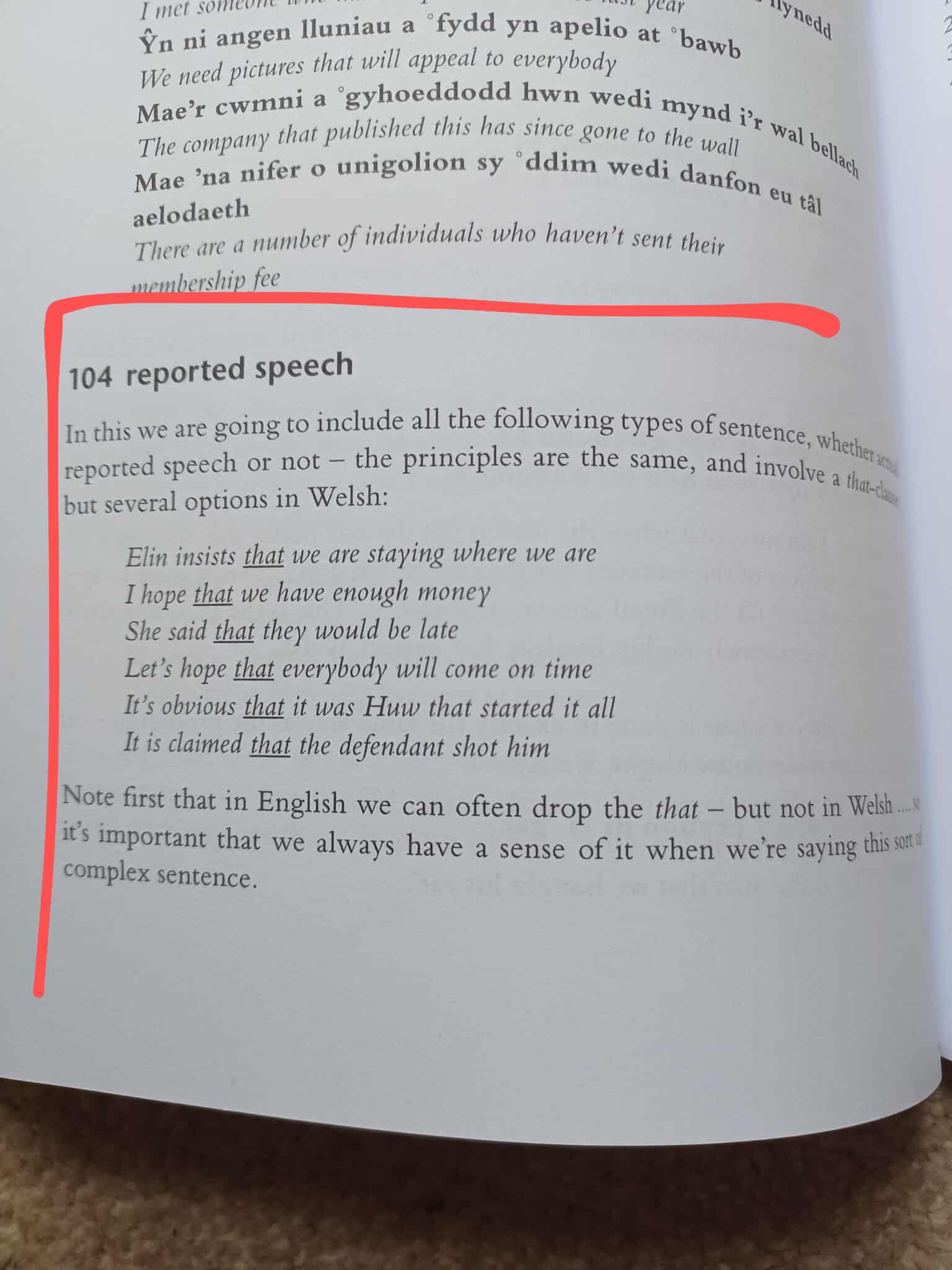
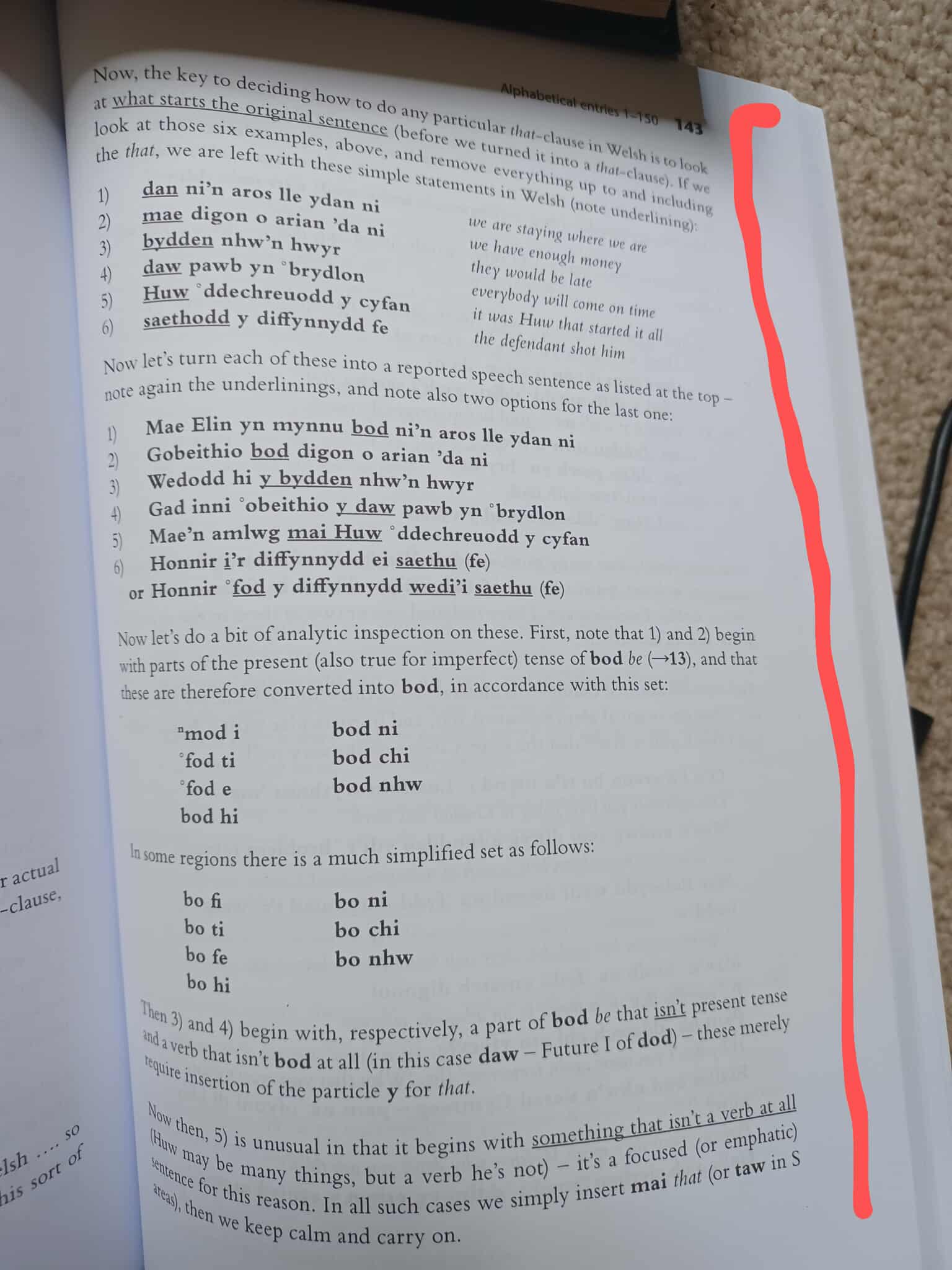
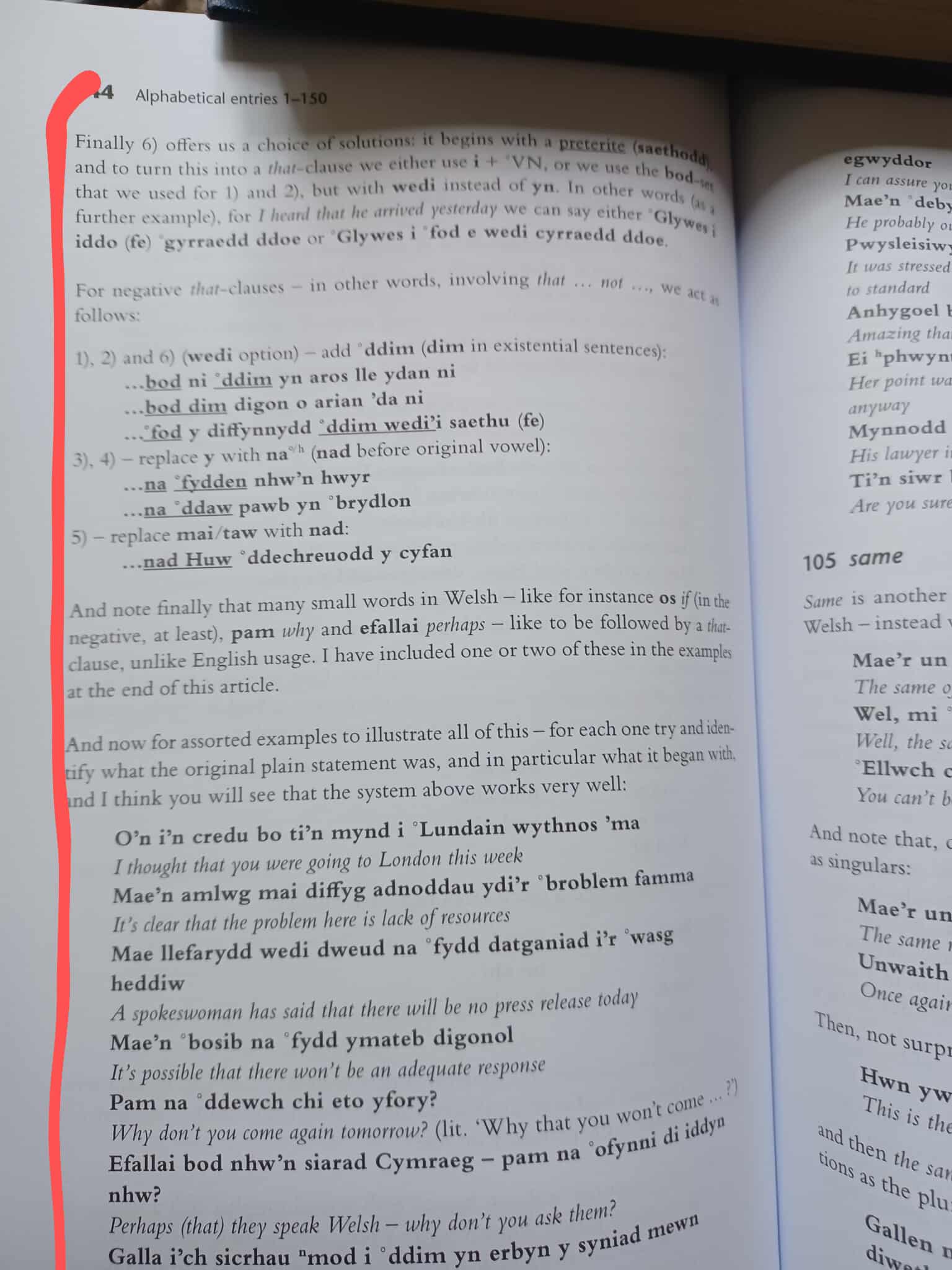
7 Likes
Thank you very much Gareth
1 Like
Your self publicity may just have worked Gareth. Which one of your books is this from please?
2 Likes