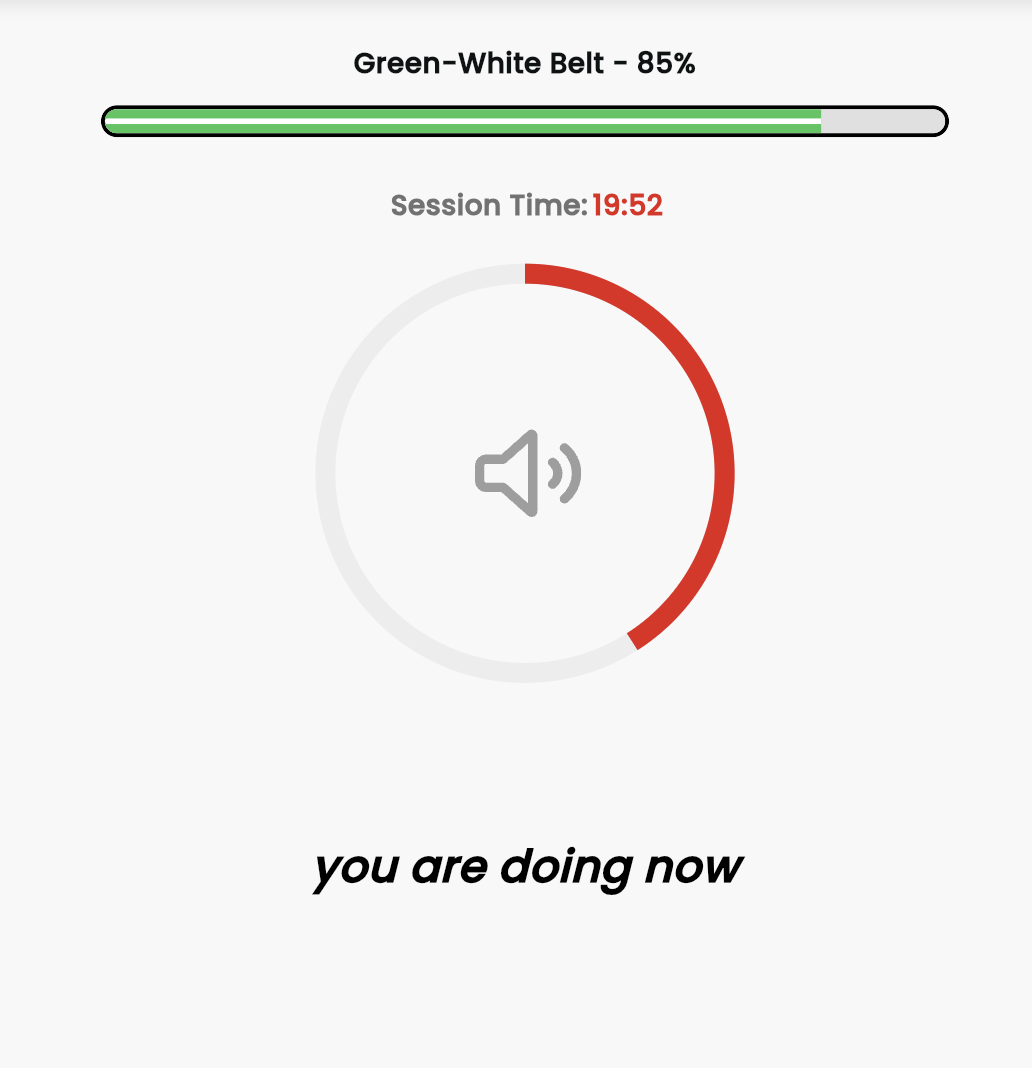
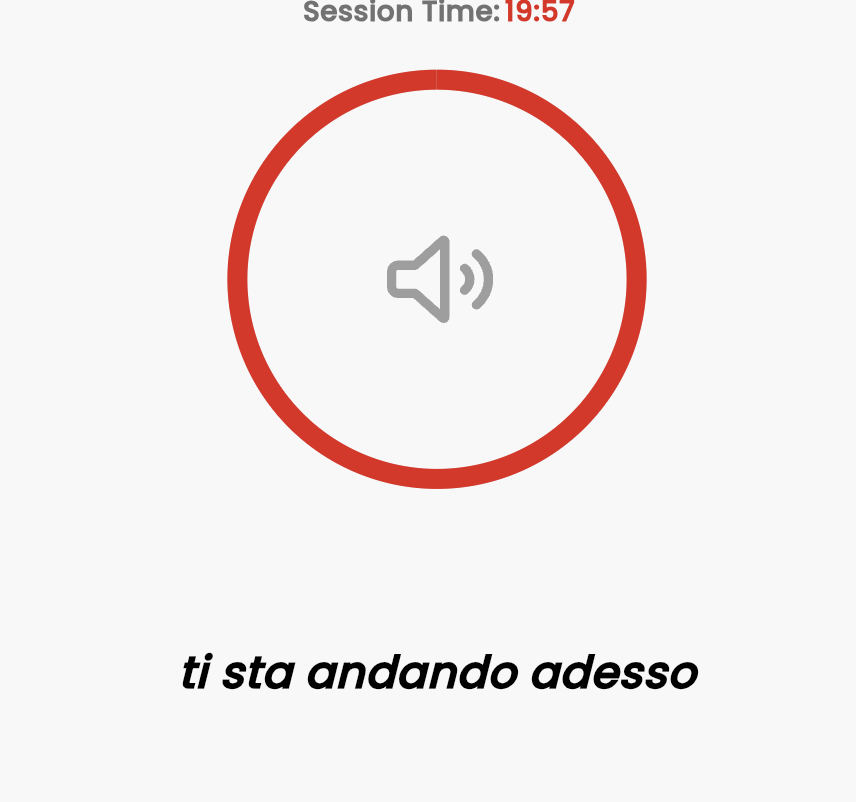
I know that it’s complicated to do a screenshot or write down the sentences you’d like to double check, because they disappear very quickly and there’s no way to go back right before the last one.
I wonder if you maybe missed a bit (=“spending time”) while copying them here?
In any case, if the prompt is:
“It has been lovely spending time watching the children play.”
It has been lovely = E’ stato bello (ok, same in both translations)
spending time = passare del tempo
watching = a guardare or guardando
the children play = i bambini giocare
If the prompt is:
“It has been lovely watching the children play.”
It has been lovely = E’ stato bello
watching = guardare (without “a” before the verb and no alternative possible here)
the children play = i bambini giocare
(speaking of progress— now or for any other question, if you know where a set or sentence is more or less, in terms of belt and approximate percentage, I may try and search it and listen to it)
1 Like
Once again, it’s my typing that’s the problem here. Yes, I meant guardando, not guardano. And I also managed to forget to include passare del tempo.
So IF I’d actually typed things correctly, I’d have been right that either guardando OR a guardare are acceptable.
So sorry to make things difficult by messing up the asking of the question 
Right, both forms would be acceptable.
And don’t worry about the typing, as the exercises often remind you:
Non devi preoccuparti di fare errori 
 it worked anyway!
1 Like
I really wish each sentence came with a little number in a corner, it would make it so much easier to report sentences.
1 Like
That’s brilliant. Thanks!
Another suggestion for @Kai. I don’t know if this even makes sense, but it would be useful to have a table of how long each belt takes so we could plot out our next week or month or whatever. I think this varies depending on other factors such as what buttons (revisit/skip) you may have pressed (accidentally or out of morbid curiosity), so might be clumsy or troublesome to implement, but it would be nice to have. Also a clearer explanation of what the revisit/skip buttons do would be good.
If I’m asking for the moon, that means I’d be happy with a piece of cheese.
1 Like
Oh, this might be more of a cultural question than anything else, but I just got to ‘una tazza di caffè’; would that be more usually just ‘un caffè’? (i.e. what we English speakers would call an espresso)
Yes, we just order “un caffé”. In Italy is interpreted directly as an espresso, which is served in a “tazzina”.
A “tazza” Is the standard size for cappuccino, caffé americano and tea. So if you ask for a tazza di caffè, you might be asked a few extra questions for them to make sure of what you really want.
2 Likes
I was just jumping a bit around the course and spotted this.
I can easily guess how the system came up with this, but I have the impression that it can be confusing for the learner. @Kai
They have been simplified since the early release of the app. Now, Revisit takes you back one Introduction item, and Skip takes you forward one Introduction item 
2 Likes
Ah, so it no longer increases or reduces the amount of repetition you hear?
1 Like
I can confirm that it threw me a bit for a few seconds when I got to it; but in practice, it was really easy to figure it out.
Figuring out that kind of thing is part of the joy of studying a language and it really makes you notice something you might otherwise pass over with a shrug (because although we don’t say “it’s going well to you” in English, it makes perfect sense). That extra work and that extra shot of happiness when you get it really help you remember IMO, because it’s the kind of structure that’s really easy to understand but might be a bit harder to produce.
2 Likes
A question about the use of e stato. @gisella-albertini if I remember correctly, you said e stato malato didn’t really work unless it was followed by fino a (or similar) because you use e stato for completed conditions, not ongoing ones.
So, in the example I asked about the other day, I think ‘e stato bello’ works, because it is followed by ‘ma adesso devo andare’.
But we have just had ‘e stato sconvolgente aspettare, quindi dovremmo fare qualcosa’ which implies it’s ongoing. So should that just be e sconvolgente?
Am I getting (at least approximately) the right idea?
No, they just work in a very straightforward way to navigate.
Ok, great I think I know that feeling.
What I was wondering is if it’s clear to learners that “you are doing now”, by itself means “stai facendo adesso”, just like in English.
And that “(ti) sta andando ora”, by itself means “it/he/she is going adesso”, with no clear purpose for the “ti”. And, for some reason I’d tend to guess they mean “te ne stai andando ora”, but just forgotten “ne”).
In order to use it the way it means to teach, you always need to include, after it, how it is “going”: bene, male, così così etc.
But if you think it’s clear, that’s fine then!
I guess sometimes things seem more complicated or odd to us natives than to learners!
Yes, what you said about the first two examples is correct.
Well, not necessarily.
if I read this sentence I understand that the wait has been shocking or astonishing, but luckily they don’t have to wait any more now. So they’d better do something, now that they can!
Otherwise, if they say this while they are still waiting, and the person who’s speaking thinks they should try and do something to change the situation…you’re right, I would expect them to say “è sconvolgente aspettare, quindi dovremmo fare qualcosa”
1 Like
Ah, yes. I was thinking of it as ‘we should do something (about it)’. Subtle difference, but I think I’m beginning to get the hang of which to use when. Thank you!
1 Like
It becomes clear with the full sentence. IIRC, it was something like “…that you are doing very well.” and the Italian is literally “that it is going very well to you”.
I can only speak for me, but I I didn’t find it confusing.
1 Like
Now my progress bar is over 80% I can say with a fair degree of confidence that there are definitely some phrases that continue to be repeated a lot more often than others. I don’t know how easy it is for you guys to do anything about it, @Kai ? I’m guessing it’s something buried in the underlying algorithm and not within your control.
But I have a suggestion that might at least mitigate the problem. Often I have a vague notion that we’ve been taught something way back that hasn’t been repeated, but I can’t pin down what it was, even in English. What if, as we reach certain milestones, we were to unlock access to a list of the seed sentences we have been introduced to up to that point? Just having that list in English would probably suffice to jog our memories. And if not, we can always look things up, or ask, the way we have to if we’re confused by a grammar question.
Crazy idea? Doable?
2 Likes
Silly thing around the 96% mark. Robo-Aran introduces ‘lives’ as in he lives, but he pronounces it ‘lives’ as in more than one life - and continues to do so every time it is used as a single word.
Also, we are reminded of ‘mi chiedo’ (I wonder) but both the model voices swallow the 'mi’so you only hear ‘chiedo’