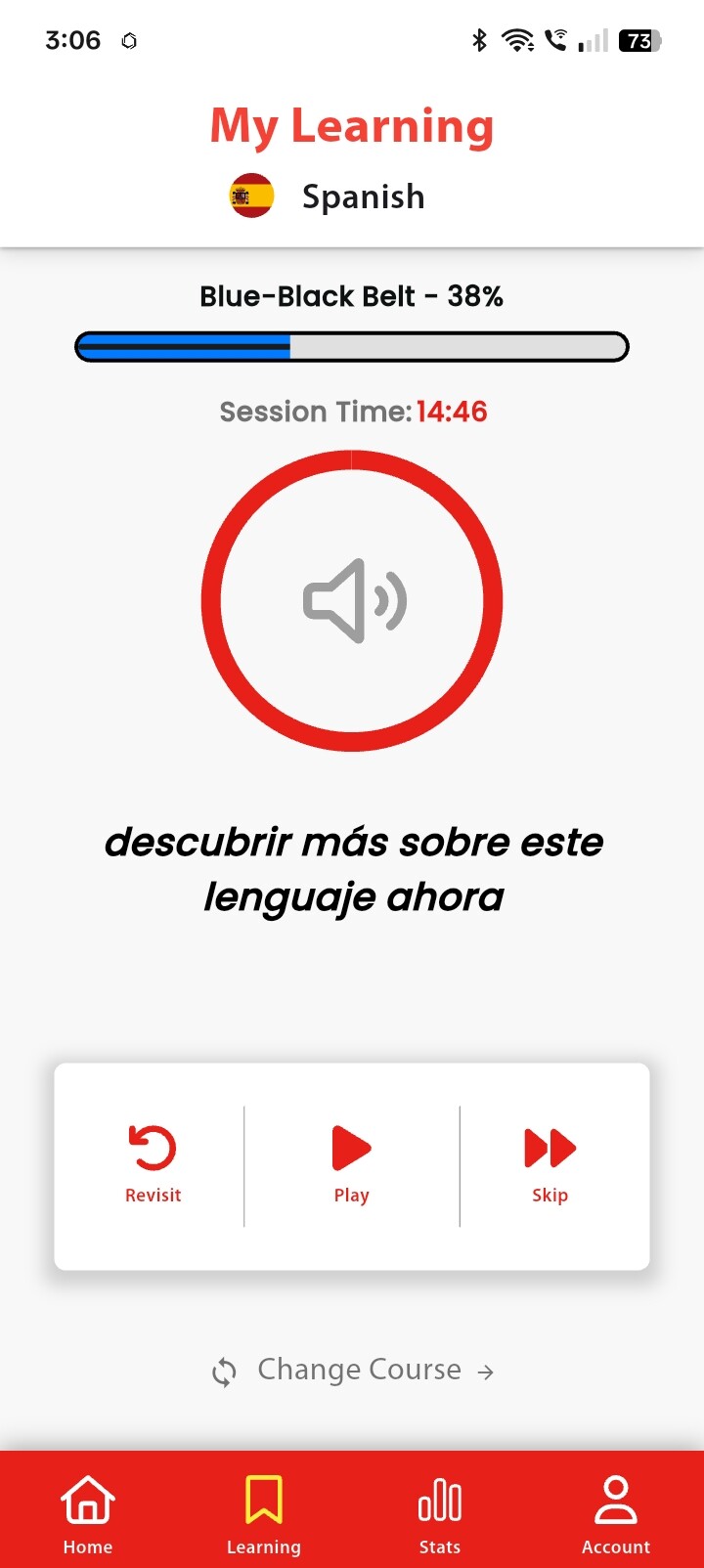
Hi, I don’t think the use of lenguaje for language is very natural. I’ve only ever heard idioma or lengua before. I did some research and it’s a more technical word not used in everyday language? Might be worth changing it? It’s in the blue with black belt section of the course.
Regards Ingrid.
2 Likes
Thanks for the heads up, Ingrid. Idioma is definitely the more common word. We’ll look into that.
EDIT: Out of curiosity I did some research on the difference between idioma, lengua and lenguaje as I know I’ve heard them all, but wasn’t 100% sure of the different contexts.
I got this from a Spanish friend:
LENGUAJE
- the general ability of humans to communicate, e.g. el lenguaje es una facultad humana - Language is a human faculty
- describing a register or style of language, e.g. lenguaje formal/informal, lenguaje científico
- unspoken or symbolic method of communication, e.g. el lenguage corporal (body language), el lenguage matemático
LENGUA
- a defined natural language, e.g. la lengua española, lenguas indigenas
IDIOMA
- a more everyday, natural word for language which focuses on the social and practical use, e.g. hablo tres idiomas, el inglés es mi idioma nativo
So I’d be curious to know what the English prompt was for that phrase, and if it could have been interpreted with one of the meanings for lenguaje above.
3 Likes
Hi Debbie, it’s actually being used throughout the whole of this belt since it was introduced.
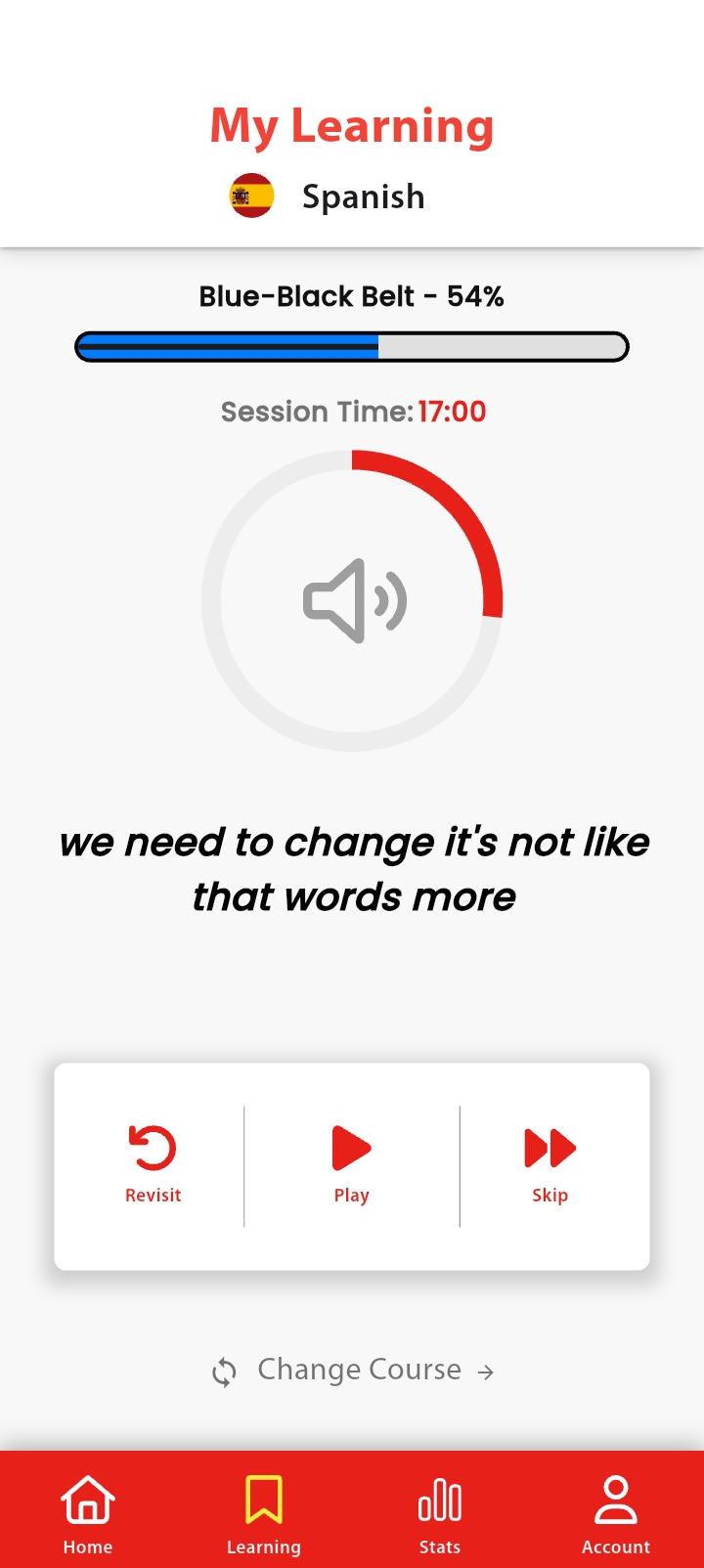
Another thing that I’m noticing in this belt is the number of nonsensical sentences.
Here’s one example, but there have been quite a few so far.
Regards Ingrid
1 Like
We’re hoping to release an updated version with those nonsense phrases weeded out fairly soon. For now, just think of them as practising ‘chunks’ of language, but don’t try to make any sense of them.
1 Like
Thanks very much indeed for flagging these up, Ingrid, it’s a huge help 

2 Likes
No worries. 
I think the system is really good but I do find errors here and there that if fixed could make it a really great app.
I hope you don’t mind me bringing them up, it’s not as a criticism, just want to make it better so that learners don’t learn incorrect structures etc.
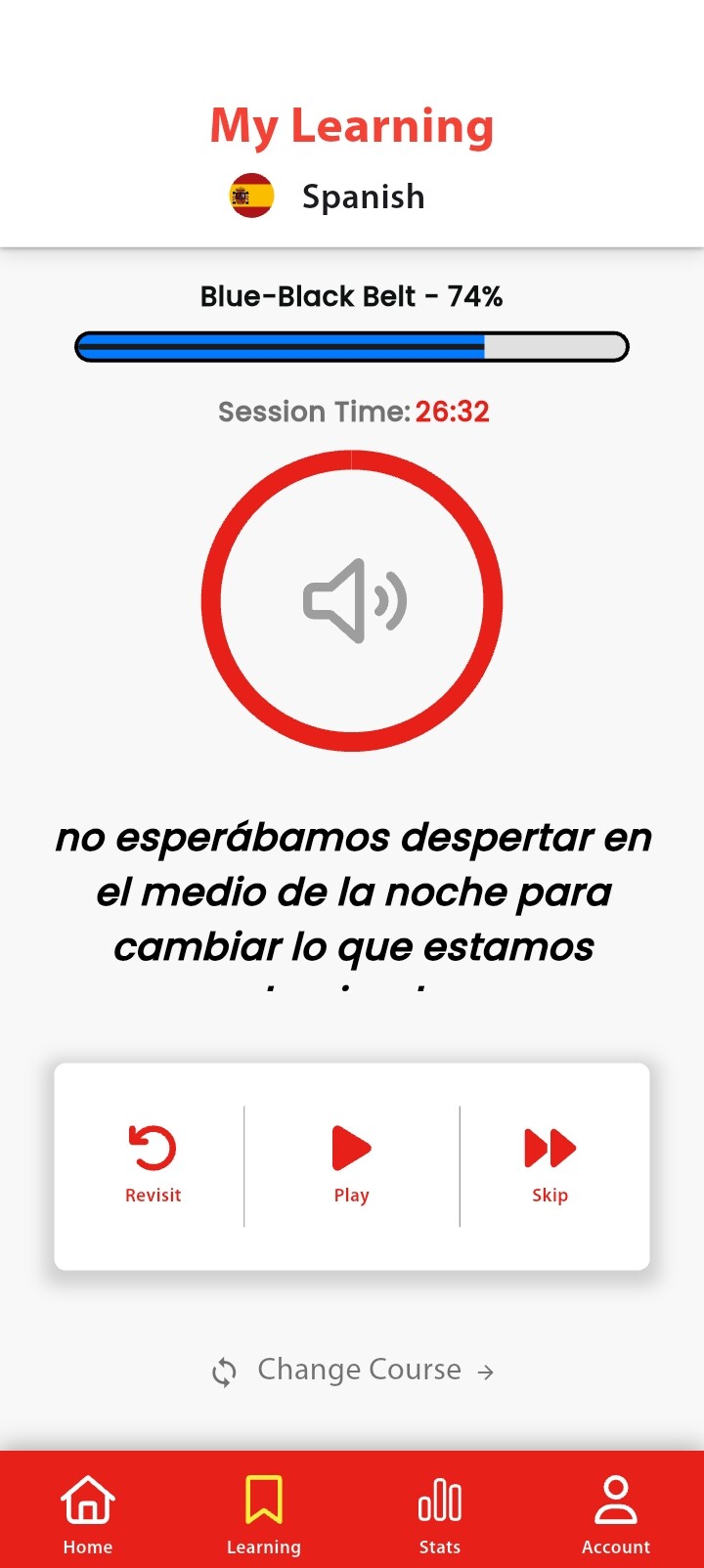
For example, in the following sentence, I believe the verb ‘despertar’ is a reflexive verb and requires ‘nos’ to be attached to it.
“No esperábamos despertarnos en el medio de la noche.”
I just finished a year of Spanish at Uni and we did a lot of reflexives so it stood out to me.
Regards Ingrid
1 Like
Yes, it is a reflexive verb - gracias Ingrid!
1 Like
De nada 
While fully acknowledging that the transitive and reflexive uses are the normal uses of “despertar” and not arguing that this sentence isn’t wrong (as I don’t have enough knowledge to be making any claims about that), I have to say that I’ve definitely seen “despertar” used as a non-reflexive, intransitive verb, particularly (but not only) in the imperative form.
I have the impression that this usage might be more literary or non-literal (or perhaps both); but I don’t think it’s always wrong. Whether it’s wrong in this particular sentence, I don’t know. Perhaps someone with more knowledge can say when it can be used this way and when it can’t.
FWIW, the thing that jumped out at me more when I read the screenshot was the “en el medio de la noche”, which I’m sure must be correct, but I honestly wouldn’t have guessed as being the most natural way to say “in the middle of the night”. My Spanish is very rusty (I was last in Spain in 2016, so I’ve barely had the chance to speak it with anyone for almost 10 years now), so I’m probably wrong and just showcasing how much I’ve forgotten in the last decade; but to my (rusty) ears, it sounded a little unexpected.
It’s reflexive if you’re waking up yourself, but transitive if someone/something wakes someone else, e.g.
me despierto temprano todos los días - I wake up early every day
el ruido me despertó temprano esta mañana - the sound woke me early this morning
So in Ingrid’s example, it should be no esperábamos despertarnos … - we didn’t expect to wake up (ourselves)
With en el medio de la noche - it’s a bit over the top. It would normally just be en la noche but it doesn’t hurt to practise it for a bit more emphasis.
1 Like
I know, Deborah, I’m aware of all that. As I said above, I don’t dispute that those (the reflexive and transitive uses) are the normal uses; but I’ve definitely seen it used as a non-reflexive, intransitive.
It might be literary or non-literal or possibly even down to dialect, but I’ve definitely seen it.
1 Like
With “en el medio de la noche”, it doesn’t sound wrong to me, it just doesn’t sound all that natural. FWIW, it sounds a bit more natural to me without the “el”; but that’s just my subjective impression as a fellow learner whose Spanish is rusty. I can well imagine that I am wrong about that.
That’s interesting. I haven’t come across it myself, but I don’t tend to read a lot in Spanish at the moment - too many other languages on the go! SSi focuses on everyday, spoken language, so we do need to go with what’s the most common usage.
I agree it sounds kind of clunky. I’ll have to sneak it into a conversation with my Venezuelan housemate and see if it raises any eyebrows. He’s usually quite quick to pick on my Spanish if I say something he doesn’t think is 100% correct. 
My brain is supplying media noche, but it might just be thinking of mezzanotte. Argh.
medianoche is ‘midnight’
According to Google Translate, en medio de la noche is ‘in the middle of the night’.
My housemate is away until Sunday evening, but I’m definitely going to experiment on him! 
1 Like
I don’t know what the original prompt was, but assuming it to be “in the middle of the night”, I had a play comparing my intuition in Catalan with what Google Translate suggested, and then double-checked that in the Diccionari of the Institut d’Estudis Catalans. Obviously, Castilian usage might be quite different from Catalan, but… Google suggested mitjanit (medianoche), which I was suspicious of; but DIEC defines mitjanit as ‘midnight’ or ‘part of the night around midnight’, which feels like it fits the English ‘middle of the night’ quite well. I wonder if medianoche can convey the same sort of slightly less precise meaning?
ETA: Just realised that as I didn’t leave the search page, it wasn’t actually Google but DuckDuckGo and Microsoft. The same combination suggests en mitad de la noche for Castillian.