Apologies if this is rather a basic question or if I’m missing something… it wouldn’t be the first time … but could someone please explain the difference in meaning and usage between dach chi and ych chi.
I simply can’t make rhyme nor reason from the app, which at first seemed to consistently translate ‘are you’ as ych chi (occasionally it translates ‘you are’ as the same )…
But then seemingly randomly - at least to my eyes and ears - translates ‘do you’ as either dach chi or ych chi.
Are they interchangeable? In which case does dach chi also mean ‘are you’ o- which seems odd?
Enough - if someone could help explain, it might just stop me frying my brain.
Both are used as 2nd person plural of “to be”, so they both mean “you are” and “are you?”, depending on context.
The difference is regional: dach chi is predominantly used in the north, while ŷch chi is the usual southern form. Normally with SSIW you choose if you want to learn northern or southern variations, but you make it sound as if the app would show both versions without changing the regional settings. If that is the case, then I don’t really know what’s causing this.
In any case, you can simply use the one that you prefer.
Thanks so much - I’m no longer quite so dizzy!
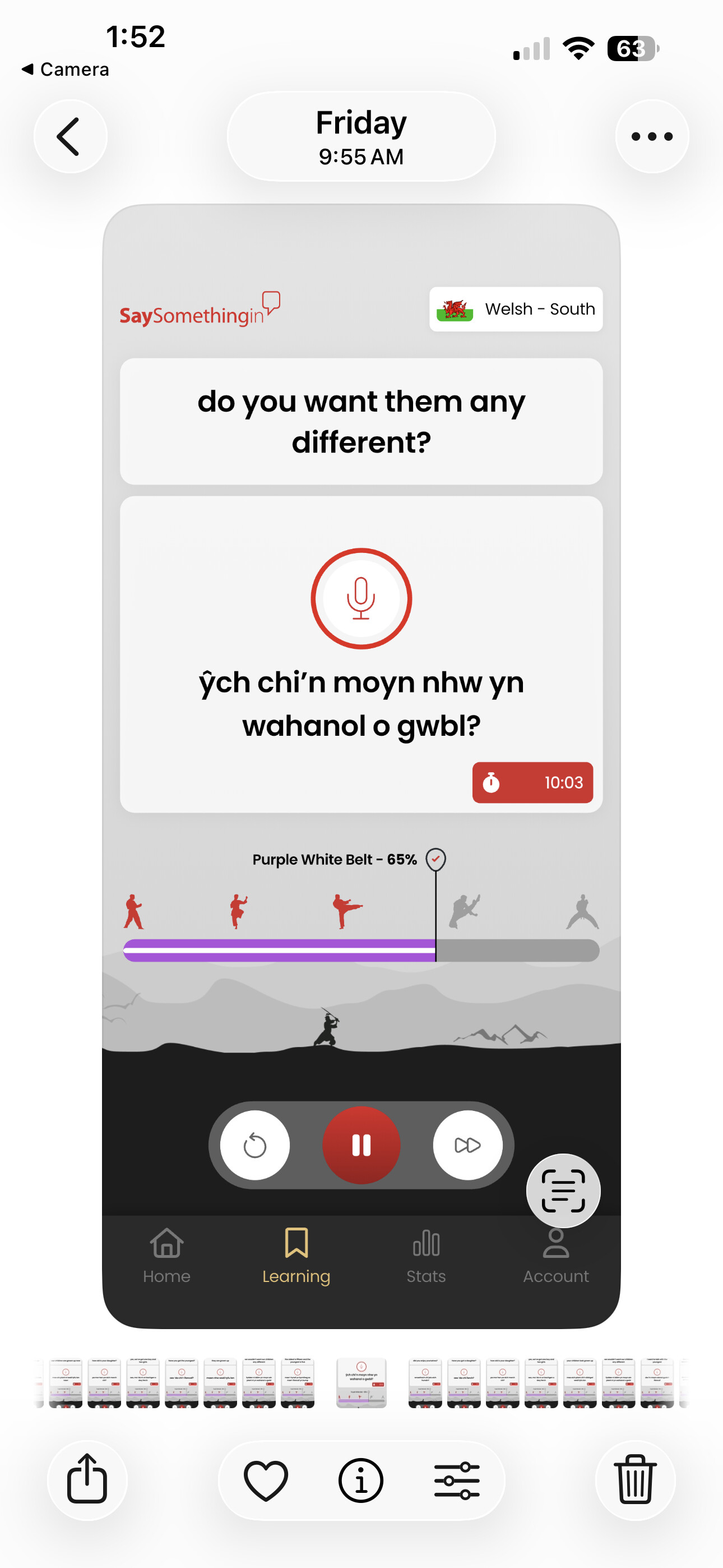
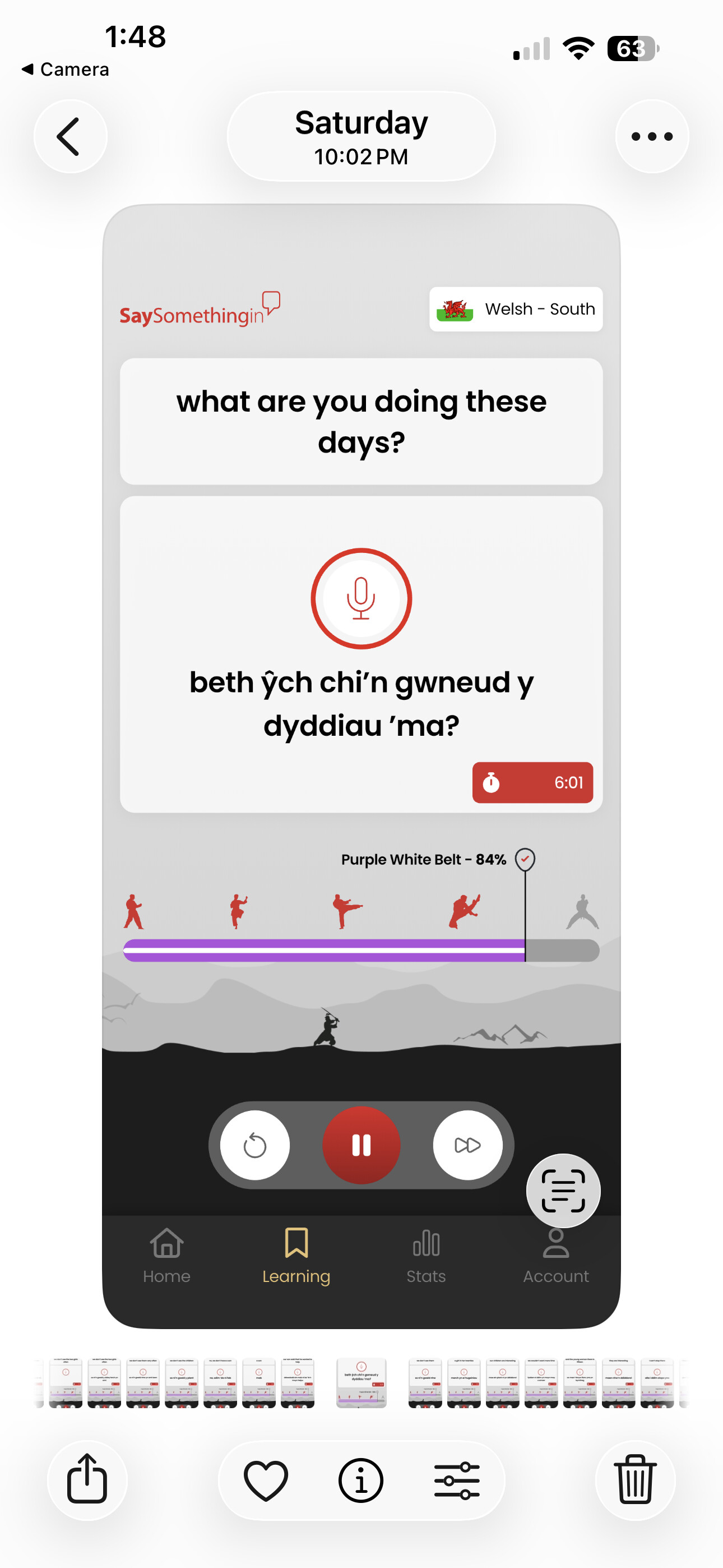
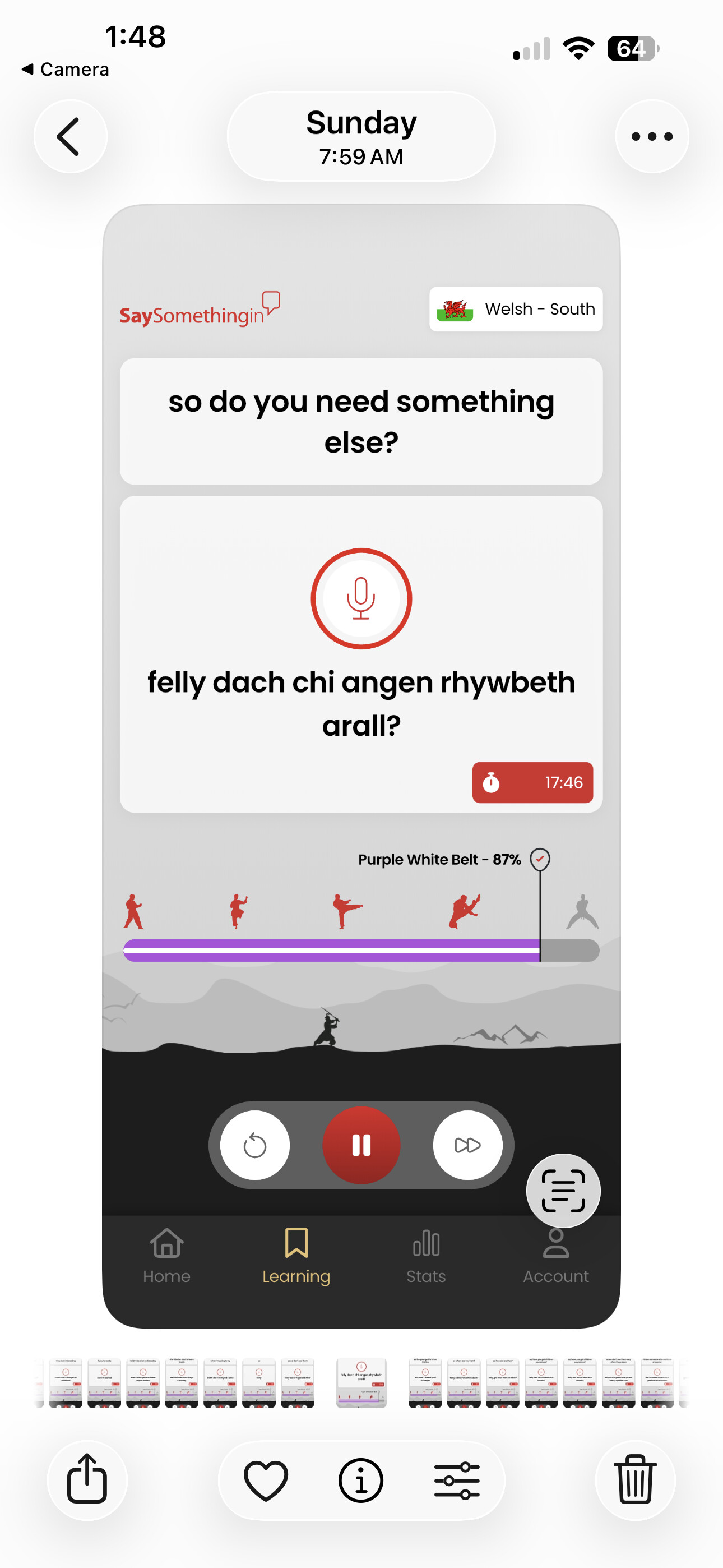
I use the app almost exclusively on my phone and screenshot most slides so that I can revise quickly after a session - it also allows me to reverse the process, translating the words from Welsh to English. Looking back, there are definitely multiple switches between dach and ych on the South Wales version, so perhaps it’s a glitch or oversight.
Either way, I can press on without scratching my head so much.
Many thanks once again
Does this help - I’m sure there are others but I don’t keep the screen shots for long. Maybe I also got myself a bit confused with ‘da chi as well, which I assume is short for gydda chi - but clearly as the screen shots show there are some cases when it’s being interchanged. Either way I understand now and recognise this is a tiny confusion in an excellent app …
It’s probably not a bad thing for you to be familiarised (at least passively!) with ‘dach chi’ because it’s in very common usage in most parts of the country and the media - but I suppose ideally we really ought to stick to one
@Kai would it be possible to replace ‘dach’ with ‘ych’ throughout the southern course? Or would it be a serious headache?
Definitely no bad thing - I only wanted to clarify really The app is great - thoroughly enjoying it and as a result just had a conversation with a Welsh speaker out in the French Alps that mixed broken Cymraeg with broken French and a bit of English too - how random but great is that!
Seeing the screenshot gave me an idea when this “error” may have been introduced. Up to the challenges, “I need” was translated as “mae eisiau i fi” in the southern course, and while this is a natural way to express need in the part of Wales where the Southern voice of the time came from, it is a bit more complicated than the usual northern form “dw i angen”. So I think starting with the first Automagic course, the decision was made to also use “angen” in the southern course.
So it appears that a few phrases were replaced in full with their northern counterparts, and some details like dach → ŷch probably just fell through the cracks.
But please be wary of just running a simple search and replace. There is a famous example of a DnD rulebook containing the non existing words “iwizard” and “dawizard”. Why? In a previous version, players performing magic were called “mage”, but someone decided that “wizard” would be the better term, so they ran an automatic search and replace. But they didn’t make sure only to search for complete words, and they obviously forgot about words like “image” and “damage”
Oh, what a lovely story, how brilliant! I love that kind of stuff. Yes, absolutely get it, and the clarification is also very helpful for us - I think @Hendrik has nailed it and this may well be something to do with the change from ‘eisiau i mi’ to ‘dwi angen’, or something similar


 The app is great - thoroughly enjoying it and as a result just had a conversation with a Welsh speaker out in the French Alps that mixed broken Cymraeg with broken French and a bit of English too - how random but great is that!
