Yes, that’s the one.
2 Likes
Quick question: the song title ‘Sa neb fel ti’, meaning there’s no one like you. Can someone explain what ‘sa’ is? Is it a clipped version of something longer? Is it from a particular dialect?
1 Like
It is a very shortened version of does’na, and it is usually only heard in this way by speakers from the north.
In the south you’ll instead hear 'sneb for does neb. That is in essence the same structure, just without the 'na (from yna), which is grammatically speaking not necessary.
3 Likes
And also worth knowing that in the Southern dialect (as taught by SSIW), “sa” and “so” are used in negative present tense clauses (and maybe another tense , I can’t remember the name of, maybe the “wedi” one).
So you’ll hear and see
Sa i’n moyn = dw i ddim yn moyn
So fe’n mynd = dyw e ddim yn mynd
“Sa” only used for 1st person singular, “so” for all the rest.
3 Likes
Here’s something.
I had understood from various sources (Gareth King, Duolingo) that when using the short form Preterite in a negative statement, any specific object referred to uses “mo” instead of “ddim”.
GK quotes “weles i mo’r ffilm” as an example.
It’s not a rule that fills me with great pleasure I can tell you.
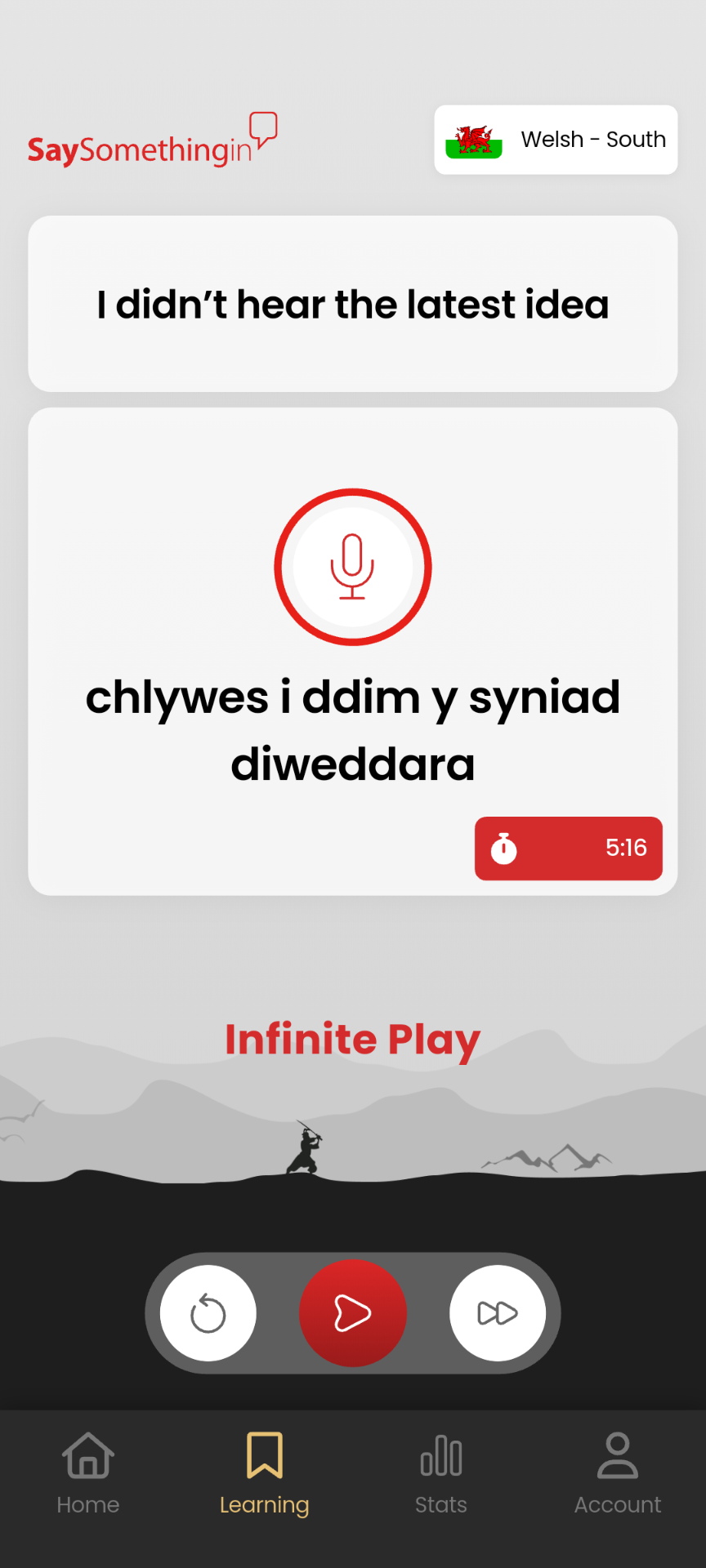
Today in my daily SSIW revision I came across this example.
Thinking I was clever and remembering the advice of learned mentors I translated as
“chwlyes i mo’r syniad diweddara”
And sat back to applaud my cleverness.
That is until the suggested SSIW answer appeared.
So what’s going on here,?
Is it some nuance that I’ve missed? Is it some feature of the Southern dialect that “ddim” is used in these cases. Or is that Southerners (I’m one) are just too lazy to use the “correct” form?
Don’t get me wrong. I would be overjoyed to learn that I never have to use “MO” ever again in my life.But just need some guidance.
Thanks
1 Like
This is really, really about flavouring - you absolutely will hear people using ddim instead of mo - I would personally say that in this case, mo sounds more natural, but if you went on a lifetime strike with ‘mo’, you’d have precisely zero difficulties ever in being understood 
But since you seem to have already cracked it, you might as well indulge 
1 Like
Another option is chlywes i ddim o’r syniad which is where the ‘mo’ comes from if I’m not mistaken
2 Likes
From ‘A Oed Heddwas’ by Myfanwy Alexander…
‘Digon teg, ond dwi wedi cael hen ddigon o fyw yn y blydi buarth.’
'S’myda, ‘ta.’
I can work out the first line, but can’t make head or tail of S’myda, 'ta. and it doesn’t come up in on online searches… Can anyone help me with it, please?
(I think “‘ta’” is basically ‘innit’, but no idea about the first bit…)
Diolch!
1 Like
I’m currently reading that. And enjoying it. It’s making me chuckle.
I took that to be a second person singular imperative form of symud meaning, “Move, then.”
2 Likes
@SteakAndEggs is right - the apostrophes show you where letters have been elided, so S[y]muda is the imperative of “symud”. And yes, the 'ta is one of those tags that Welsh speakers use so much - “innit” is a great way of expressing that!
2 Likes
@SteakAndEggs, @sara-peacock-1
Thanks very much – that makes perfect sense.
I’m not sure I’d have got it even it had been “S’muda”, but the y instead of the u completely threw me as I was looking for verbs ending in myd…!
Thanks again.
1 Like
I didn’t even notice that spelling change! LOL! Funny how your brain fills in the bits you need from context without you realising…
1 Like
It’s fascinating isn’t it! In this case, it’s a one-off transliteration of a sound rather than a ‘real’ (dictionary) word so it makes perfect sense to you because the original sound makes sense, while I had to go looking for spelling clues…
1 Like
I’ve noticed that a lot of the spelling mistakes I see in emails from co-workers who are first-language Welsh, or on social media, are exactly that - mixing up u/y/i. (Which makes me sound like I’m silently judging people’s writing - I’m really not! I just notice that it’s different from what I’ve learned…)
2 Likes
After all, English is such a logically spelled language (ahem) we can hardly complain about a little u/y/i confusion amongst friends… 
2 Likes
I got as far as this and thought ‘nor can I, it must be a typo’ - and then I went back and read the first line, and it switched from being impenetrable to being obvious. I think we consistently underestimate how vitally important context is for most understanding (which is why some things are just so, so much harder for learners, with their dramatically smaller context base).
4 Likes
1 Like
It’s a typo. I picked this up before, still awaiting a correction.
1 Like
I thought that, but I’m sure the second speaker said it too.
Anyway, thanks for clearing it up.
Hi,
A Oes Heddwas? (Myfanwy Alexander) again…
Cyrhaeddodd Aber fel Defi Siop, llanc ifanc swil, a dychwelodd i sir Drefaldwyn fel dyn.
“He arrived in Aber as Defi Siop, a shy young man, and returned to Montgomeryshire as a man.”
I assume that a Defi Siop is a reference to some sort of innocent character (and not a chain of corner shops ) , but an internet search doesn’t help me as to what it actually is.
Thanks for any help!