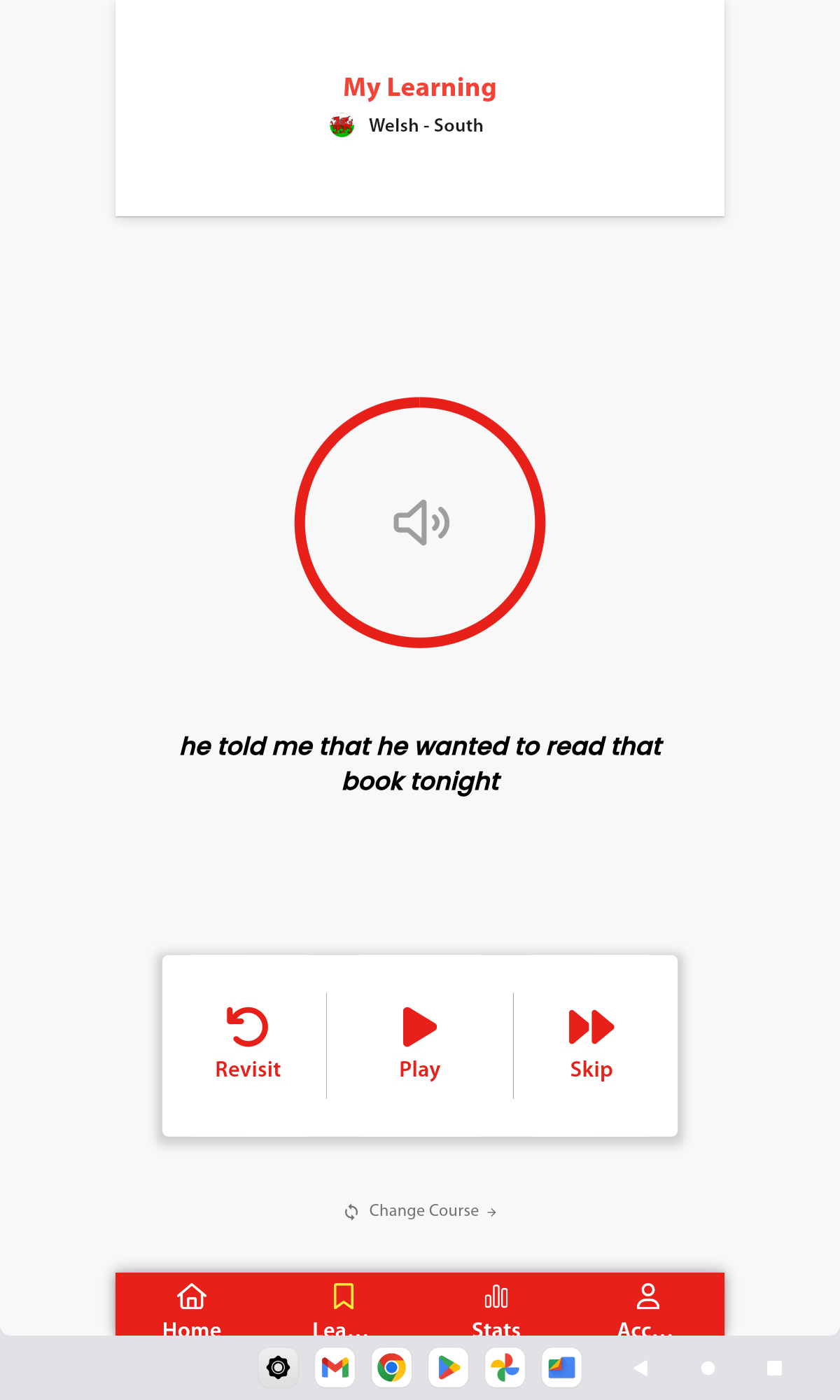
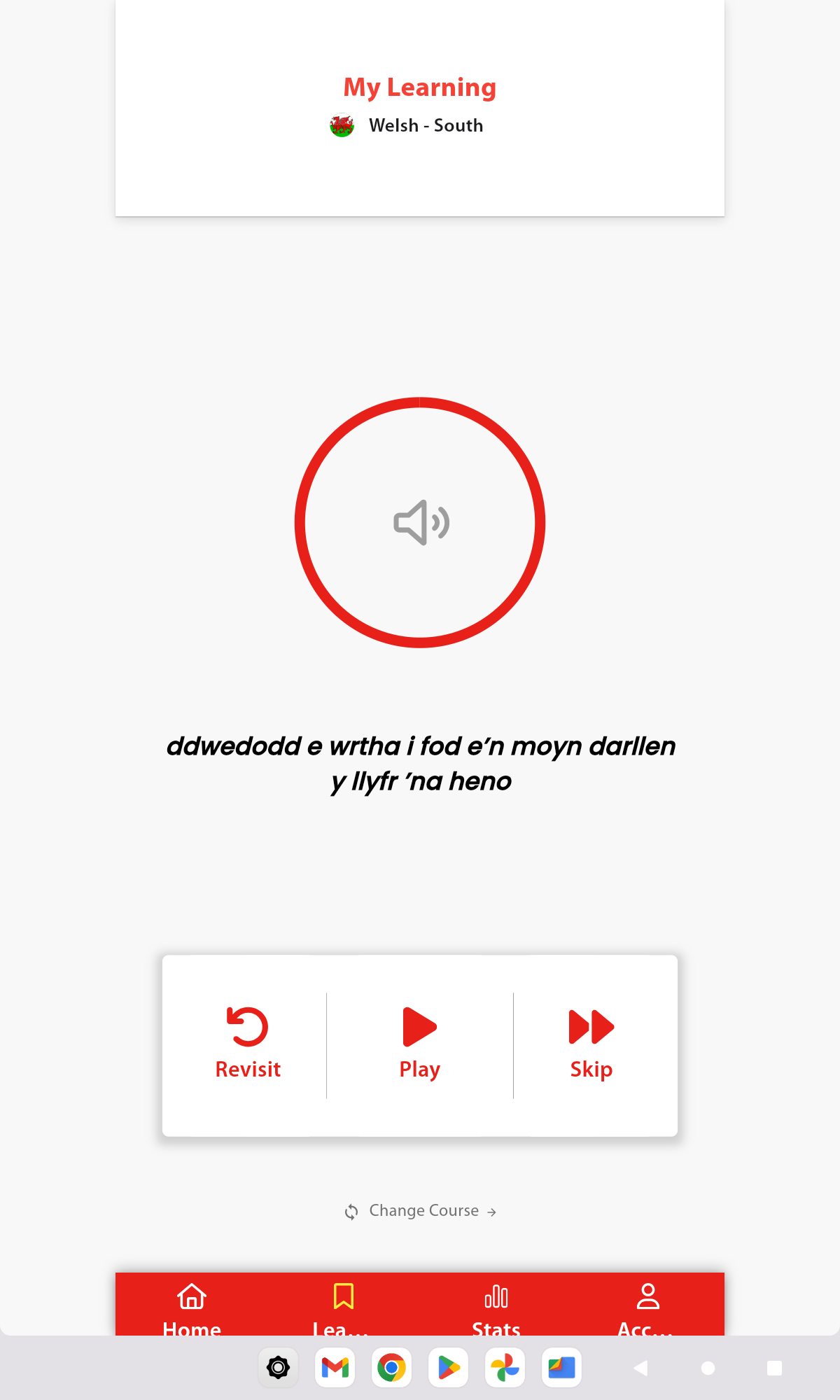
Something that is throwing me at the moment. Don’t know if it is a glitch in the course or I’m not getting something. So I took some screen shots to confirm.
The sentence “he told me that he wanted to read that book tonight” was translated as “ddwedodd e wrtha I fod e’n moyn darllen y llyfr 'na heno”
It’s the use of the present tense “e’n moyn” for “he wanted” that is throwing me. I’m sure I’ve seen similar sentences translated here as “oedd e’n moyn”
Welsh doesn’t do it the same way as English - fod e’n moyn is actually more like “he said him to want to…” so it isn’t really past or present, and doesn’t need to change just because you’ve got ‘said’ instead of ‘says’ at the beginning.
This comes up a lot, for a lot of people. Don’t worry about it.
Ddudest ti can start a sentence and doesn’t need anything to introduce it - it’s just “you said” while i ti ddeud needs to follow on from something else in the past, e.g. nes i glywed i ti ddeud “I heard that you said”
fod o’n comes from the longer, more formal ei fod o’n while bod hi’n comes from the longer, more formal ei bod hi’n
The full set if you’re interested is: fy mod i - that I dy fod ti - that you ei fod o/e - that he ei bod hi - that she ein bod ni - that we eich bod chi - that you (pl) eu bod nhw - that they
The set Deborah has given above are the grammatical ones, however, as with many things, the colloquial versions do not always match the grammatical versions, and bo’ ti’n, bo’ fi’n, etc are an example of that. Both sets are used widely in speech, it’s just that the grammatical set is more correct for writing or formal speech.
Preposition trouble!
If I’m sending messages, photos, attachments etc. using a particular platform such as Slack, is it anfon x mewn Slac or is it trwy or yn or ar or something I haven’t even considered?
I have been thinking too hard about this and now am not even sure whether it’s “most correct” to say on, in, or through in English!
I’m not really sure what you are asking here… does is never used with pawb, only with neb. Does neb … means literally “There is no-one …”, for example: Does neb yn meddwl fod hyn yn syniad da. – No-one thinks that this is a good idea.
The positive opposite is just expressed with mae: Mae pawb yn meddwl fod hyn yn syniad da. - Everybody thinks that this is a good idea.
Remember that oes and its negative counterpart does (which is just a historically shortened form of nid oes) are “special” forms of the verb “to be” that are used when talking about existence (or non-existence). So in the same reasoning why you wouldn’t say “Dyw dim plant gyda fi” (the correct form is of course Does dim plant gyda fi.) you also say Does neb yn gwybod instead of “Dyw neb”
To add to what Hendrik said (because he was quicker typing than me!), it’s because neb is one of the exceptions when it comes to negative words and whilst in English we can say, for example, “no-one is here” in Welsh that sentence requires us to say “there is not anyone here”, and does = “there is not”.